
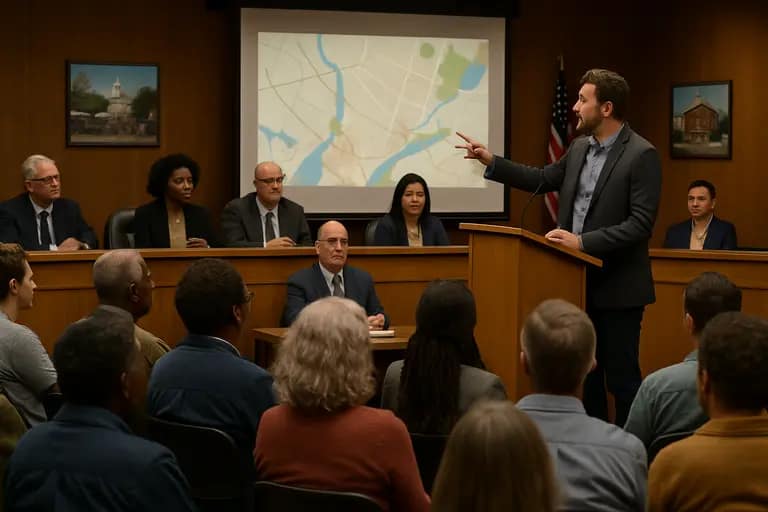
The Statesville Moratorium took effect on September 14, 2026, after the Statesville City Council unanimously approved the second reading of an ordinance pausing new telecommunications and data center applications for 180 days. The action applies inside Statesville and its extraterritorial jurisdiction, giving city leaders time to review development rules before considering any new proposals of that type, according to WBTV reporting on the council vote.
For residents, the decision changed the civic calendar more than the construction calendar. City staff reporting cited in the research for this report said there were no new and pending data center applications in Statesville or its ETJ when the pause was adopted. That means the immediate effect is procedural: no new applications can move forward during the review period, while city officials consider how local rules should address large modern facilities.
What The Statesville Moratorium Changed
Statesville Moratorium Timeline
The ordinance approved on September 14 replaced an earlier proposed 150-day pause. Research materials show the City Council extended the period to 180 days during the first reading on August 10, 2026. The original 150-day proposal listed a period from September 14, 2026, through February 11, 2027. A 180-day period beginning September 14 places the review window into mid-March 2027, based on the same start date.
The most direct change is that new telecommunications and data center applications are stopped during the pause. The moratorium does not settle whether future projects will be approved, rejected, limited, or routed through a different process. It gives the city time to write or revise standards before accepting more applications in a category that city materials said is not fully defined in the Unified Development Code.
Which Applications Were Not Affected
Research notes for this report state that previously approved applications are exempt. That distinction matters for residents tracking development already reviewed by the city. The moratorium is aimed at new applications, not retroactive action against approvals already granted before the effective date.
That line between pending, approved, and future applications will likely shape public questions at future meetings. Residents who want to understand whether a project is affected should look for the application date, approval status, and location. Projects inside the city and in the ETJ fall within the geographic reach of the pause if they are new applications covered by the ordinance.
Community Impacts Of The Statesville Moratorium
Utility And Infrastructure Questions
The Statesville Moratorium centers on more than land use. City materials cited in the research said officials and public comments raised questions about high electrical demand, water use, noise, proximity to homes and schools, environmental effects, buffering, zoning, and building size. Those issues are common points of review for large-scale data center proposals because the facilities can require substantial power and supporting infrastructure.
For the public, the utility questions are practical. Residents want to know whether a large facility would require new substations, road work, water capacity planning, emergency service coordination, or noise limits. The moratorium creates a period for city staff and elected officials to compare current rules with the type of applications they may receive after the pause ends.
Housing, Schools, And Nearby Properties
Data center debates often become neighborhood debates because site design affects nearby properties. Research materials for Statesville included concerns about proximity to homes and schools, low-frequency sound, environmental effects, and buffering. The local question is not only whether a facility fits an industrial or commercial site, but what standards should apply where large buildings, generators, cooling systems, fencing, and service roads are proposed near existing neighborhoods.
Statesville is not a large metro area. The U.S. Census Bureau estimated the city’s population at 32,181 as of July 2025, with a median household income of about $52,880 and about 14,254 employed residents in the 2023-2024 period, according to Census QuickFacts for Statesville. Those figures help explain why development decisions tied to tax base, jobs, utilities, and housing conditions can carry visible local consequences.
Public Review And Economic Development
Why Definitions Matter
The city’s research materials said Statesville’s Unified Development Code did not currently define data centers or fully address the development, infrastructure, environmental, and regulatory impacts of modern large-scale centers. A definition may sound technical, but it is often the first step in deciding where a use is allowed, what review process applies, what public notice is required, and what conditions can be placed on a project.
For economic development leaders, the pause creates a clear signal: Statesville is not closing the door on future applications, but it is not accepting new ones while rules are reviewed. For residents, the same pause creates time to ask for standards that are understandable before the next proposal is filed. The Statesville Moratorium gives both groups a deadline-driven process rather than a case-by-case debate without updated definitions.
Regional Context For Local Readers
Statesville is not alone in examining data center rules. Other North Carolina cities have faced similar public questions about energy, water, noise, and land use. Our site has also covered the Greensboro data center moratorium, which raised related questions about public input and local infrastructure review.
Readers interested in exploring more on this topic across the network can visit ITPR for related regional reporting. The consistent theme is local decision-making: municipalities are tasked with updating old zoning codes to accommodate new facility types that may not fit neatly into existing categories.
Civic Questions After The Statesville Moratorium
What Residents Can Track
The Statesville Moratorium will be judged by what happens during the 180-day review period. Residents can track public meeting agendas, draft ordinance language, planning board discussions, and any staff reports that explain proposed changes. The most useful public comments will likely focus on specific standards: setbacks, noise limits, utility documentation, water use, emergency access, environmental review, screening, and building size.
The council’s September 14 vote already set the pause in motion. The next step is the rulemaking work that follows. If city officials propose code changes before the moratorium expires, residents will have a chance to compare those changes with the concerns raised in city materials and public discussion. If no clear standards are ready before the pause ends, the council may face pressure to explain how new applications would be reviewed under the existing code.
For now, the key fact for the community is straightforward: new applications covered by the ordinance are paused, previously approved applications are not the target of the pause, and the city has a limited window to decide what rules should guide future telecommunications and data center proposals. That makes the Statesville Moratorium a civic process worth following closely through agendas, hearings, and staff updates.
Leave a Reply