
Kansas City’s Revive the Vine effort reached a September 2026 checkpoint with several major public-facing projects already open in the Historic 18th & Vine Jazz District, but the city’s own project record does not support saying every related improvement was finished by September 3, 2026. The City of Kansas City has described the work as a $400 million-plus reinvestment initiative covering 14 public and private projects in the district, according to the city’s August update. The clearest local takeaway is practical: residents, district visitors, cultural institutions, business owners, and nearby tenants have seen completed work on walking access, parking, and cultural facilities, while housing redevelopment and major highway work remain on longer schedules.
What Revive the Vine Changed By September 2026
Revive the Vine Milestones Already Open
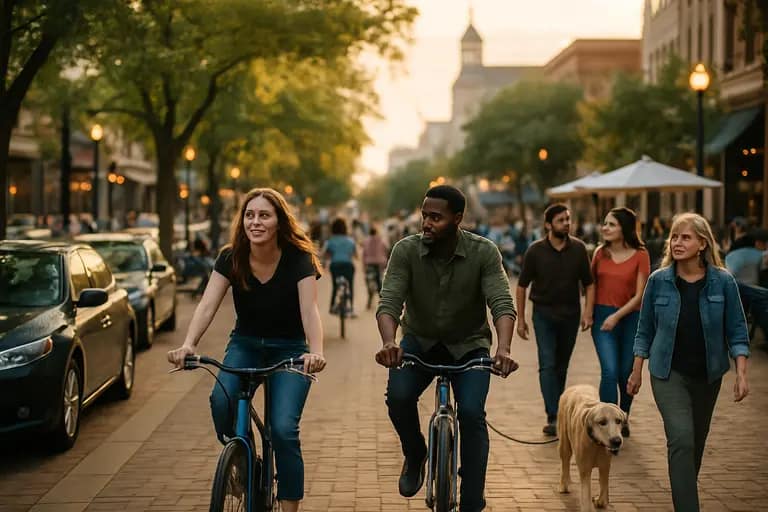
The most visible changes by September 3, 2026, were concentrated around public access and district gathering places. The 18th Street Pedestrian Mall, identified in the city’s project list as the first project in the program, opened to the public on May 27, 2026. The corridor sits between The Paseo and Woodland Avenue and was planned as a pedestrian-first space. Based on the city’s description in the research record, the work removed curbs, gutters, and parking to create a continuous walking area for people moving through the district.
The Revive the Vine portfolio also included the 18th & Lydia Parking Garage at 1819 Lydia Avenue. The city-owned garage was built to provide 470 parking spaces. Construction began in June 2025, and the garage opened in May 2026 after a ribbon-cutting on May 22, 2026. For a district that hosts museum visits, performances, restaurant traffic, public ceremonies, and neighborhood events, that parking supply is a direct civic access issue, not just a visitor convenience.
What The City Says The Program Covers
The Boone Theater rehabilitation at 1701 E. 18th Street was also listed in the project record as completed and open as of May 1, 2026. The rehabilitation, under Vine Street Collaborative LLC, carried an approximate $8.7 million budget and included restoration work and an outdoor event space. The research record says the site now features the Black Movie Hall of Fame and Black Repertory Theatre. That makes the theater project both a building rehabilitation and a cultural investment tied to the district’s public life.
For the public, the Revive the Vine checkpoint is best understood as a set of completed and continuing pieces rather than a single finish line. The city’s project framing ties infrastructure, housing, cultural landmarks, walkability, and neighborhood revitalization together. That broad scope explains why some residents may see finished work on one block while demolition, design, or construction remains active nearby.
Projects Still Running Past September 2026
Housing Work Continues Beyond 2026
The largest longer-term item in the research record is the Parade Park Homes redevelopment. The project is budgeted at more than $300 million and is planned to rebuild an existing 510-unit cooperative into more than 1,100 affordable homes for seniors, families, and working people. Demolition began in early 2026. The first phase, listed at 479 residences, was expected to be complete in 2027, while full completion was projected through 2031.
That distinction matters because Revive the Vine is not only a streetscape and cultural district program. It also includes housing changes that will affect residents over several years. The September 2026 mark does not close the civic questions around relocation, affordability, construction impacts, or the timing of new units. Those questions remain tied to public updates, development milestones, and the way the city and project partners communicate with households and nearby neighbors.
Highway Work Runs On A Separate Schedule
Separate from the district-specific public space projects, the research record identifies the Improve I-70 KC project as a state-led corridor effort from The Paseo Boulevard to U.S. 40/31st Street. Construction began in Spring 2025, with full project completion expected in Spring 2028. The work includes reconstruction and bridge activity along the corridor. The project schedule also includes a planned 2027 full closure of the three-mile stretch between Prospect Avenue and Van Brunt Boulevard for 11 months.
For the Historic 18th & Vine area, that state highway schedule matters because access to the district depends on more than sidewalks and parking. Delivery routes, commuter patterns, event traffic, and regional visitors can all be affected by highway staging. As of September 3, 2026, the research record supports treating the highway work as unfinished and separate from the city’s September substantial-completion framing for many district projects.
Public Space, Parking, And Daily Access
Blues Park Nears Its September Target
Blues Park was one of the projects expected to approach the September 2026 mark. The plan included a 16,000-square-foot outdoor roller-skating rink, a new 18-to-20-stall parking lot, and 8-foot-wide sidewalks and path connections. A June 18 city update reported nearly complete grading and excavation, with substantial completion anticipated by September 2026 and a total cost of about $1.7 million, according to the city’s June project update. The research provided for this article does not include a final acceptance notice confirming the park work was fully complete by September 3, 2026.
That uncertainty is worth stating plainly. Public works projects often reach substantial completion before every closeout item is finished. For residents, the practical questions are whether paths are open, whether the rink is available for scheduled use, whether the parking lot is ready, and whether any remaining work affects safety or access. Those answers should come from city project notices and department updates, not assumptions based on a target month.
Parking And Walking Patterns Have Shifted
The completed pedestrian mall and parking garage have already changed how people move through the district. Removing parking from a pedestrian-first corridor can improve walking space, but it also makes wayfinding and garage access more important. The 470-space Lydia Avenue garage is therefore part of the access plan for the same district blocks where walking improvements were made.
Business owners and event organizers in the area will likely track how these changes affect arrival times, short-term parking demand, and curb access. Public agencies will need to keep signage, crosswalk conditions, lighting, maintenance, and event coordination in view as use patterns settle after the May 2026 openings. For insights into how these changes compare to other network improvements, local businesses and residents can explore similar developments at Richland Chamber.
18th And Vine Civic Questions After September 2026
What Residents Can Ask Next
The September 2026 checkpoint gives residents a clear basis for civic follow-up. Some projects are open, some were near their target, and some are scheduled years beyond the September date. The public can use that timeline to ask more precise questions at city meetings, through council offices, and in project comment channels.
- Which Revive the Vine projects have received final completion or closeout approval as of September 3, 2026?
- What remaining work, if any, is still pending at Blues Park after the September target?
- How will the city coordinate district access during the planned 2027 I-70 closure?
- What public updates will be provided as the Parade Park Homes redevelopment moves toward its 2027 first-phase target?
- When will the streetcar feasibility study produce a preferred path or decision point for the 18th & Vine area?
Why The September Mark Matters
The streetcar extension study is another unresolved item in the research record. KC Streetcar Authority, KCATA, and KCMO were studying a possible eastward route from Main Street to the 18th & Vine District, with the study area running from Wyandotte Street to Woodland Avenue and from 17th Street to 20th Street. Two route alignment options had been shared publicly, but no construction start date had been determined in the research provided.
For Kansas City residents, the September 2026 status is not a simple completed-or-not-completed story. The record shows real openings: the pedestrian mall, the Lydia Avenue garage, and the Boone Theater rehabilitation. It also shows work still tied to future dates, including Parade Park Homes, I-70 corridor reconstruction, and any possible streetcar extension. The civic task now is to keep those timelines public, separate confirmed openings from target dates, and make sure access, housing, and cultural investment remain part of the same public conversation.
Leave a Reply