• Asheville Housing Amendments were approved by Asheville City Council on August 25, 2026, changing parts of the city’s Unified Development Ordinance that govern duplexes, accessory dwelling units and off-street parking. The action mattered for homeowners, renters, small builders and neighborhood groups because it widened where some housing types may be allowed and aligned city code with a new state parking law. City officials described the ordinance package as a step toward affordable housing priorities, with language tied to removing regulatory barriers, fostering diverse housing options and supporting the city’s Anti-Displacement and Affordable Housing initiative.

    What The Asheville Housing Amendments Changed

    Duplexes In Residential And Mixed-Use Districts

    The council-approved amendments allow duplexes as a primary use in all residential districts and in certain mixed-use districts, according to the City of Asheville’s report on actions and presentations from the August 25 meeting. The city also connected the changes to strategies identified through its housing work, describing the vote as part of a broader push to address affordable housing priorities through code changes rather than direct construction alone. The official council recap said the amendments were adopted at the August 25, 2026, meeting and framed them as part of the city’s Anti-Displacement and Affordable Housing effort Asheville council recap.

    For residents, the duplex change is a practical zoning shift. A duplex can add a second home on a property type that might previously have been limited by district rules. The vote does not mean every lot can automatically hold any proposed building. Projects still have to meet applicable standards in the Unified Development Ordinance. Still, by making duplexes a primary use across all residential districts, the city changed the starting point for what applicants may ask to build.

    Asheville Housing Amendments And ADUs

    The accessory dwelling unit provisions also changed. Before the adopted amendment, detached ADUs were limited to 70% of the primary dwelling’s gross floor area or 800 square feet, whichever was less. After the change, ADUs can be up to 1,000 square feet, or smaller than the principal residential structure. The adopted package also allows ADUs on lots that already contain a duplex, rather than only on lots with detached single-family homes, and sets a 25-foot height limit for detached ADUs. Those details were reported in local coverage of the proposed zoning package before the council vote 828 News Now report.

    The Asheville Housing Amendments also removed off-street parking requirements for new residential developments. That parking change is tied to North Carolina House Bill 162, which became state law on July 6, 2026, and bars local governments from requiring a minimum number of off-street parking spaces for development regardless of use or occupancy. In practical terms, the council action brought Asheville’s local code in line with that state requirement while also changing how housing projects may be planned on smaller sites, transit corridors and mixed-use areas.

    Why Asheville Housing Amendments Reached Council

    Planning Commission Action Came First

    The ordinance package did not arrive at council without prior review. Asheville’s Planning and Zoning Commission recommended approval on August 5, 2026, by a 6-1 vote, according to the local report cited above. That recommendation gave the council a formal advisory step before the August 25 decision. For neighborhood associations and applicants, the sequence matters because zoning amendments often move through public boards before elected officials take final action.

    The city’s approach also drew from earlier policy documents. The changes were connected to Asheville’s 2023 Missing Middle Housing Study and 2024 Affordable Housing Plan, which identified strategies aimed at reducing regulatory barriers and expanding housing options. The council action did not create a new housing program on its own. Instead, it revised the development rules that shape what private property owners, nonprofit housing groups and builders may propose under the city code.

    State Parking Law Set A Deadline For Code Updates

    Parking was one of the clearest examples of a local rule being changed because of state law. With House Bill 162 in effect as of July 6, 2026, Asheville could no longer keep minimum off-street parking requirements in place for development. The council’s amendments removed those requirements from the local ordinance language. Residents may still see developers choose to include parking where site conditions or market expectations make it practical, but the minimum requirement was no longer a city mandate after the state law took effect and the local code was amended.

    This distinction is central to public understanding of the vote. The council did not ban parking, and the cited reports do not say the city required developers to avoid parking. The change removed a required minimum. That can affect site plans, construction costs and the amount of land available for housing, but the exact effect will depend on future applications and the choices made by property owners and project teams.

    What Residents And Builders May Notice

    Builder reviewing plans near a small residential lot

    Permit Activity Before The Vote

    City staff figures cited in the local report showed that between April 2025 and April 2026, Asheville received 18 applications to build duplexes and 29 applications to build detached ADUs. Those numbers offer a recent baseline for the types of projects affected by the ordinance changes. They do not predict how many applications will be filed after the August 25, 2026, vote, but they show that duplexes and detached ADUs were already part of the city’s housing discussion before the amendments passed.

    For small builders, the larger ADU size allowance may affect whether a proposed unit can meet household needs. For homeowners, the ability to place an ADU on a lot with a duplex could create new options in cases where the parcel can meet remaining city standards. For renters, the city’s stated goal is a broader mix of housing choices, though the sources cited do not provide a guaranteed rent impact from the ordinance change.

    Parking Changes May Affect Site Planning

    The removal of parking minimums may be most visible on sites where land area is limited. A project that previously needed to reserve space for required parking may now be reviewed without that minimum. That does not remove all development standards, and it does not settle questions about traffic, street capacity or neighborhood character. Those concerns may still arise through the city’s normal review channels when specific projects are filed.

    Residents interested in the broader impact of local government decisions can explore additional perspectives available on One United Michigan, a related site in the same network that offers civic coverage.

    Asheville Housing Amendments And Local Civic Follow-Up

    Tracking Implementation After August 25

    The August 25, 2026, decision placed housing diversity, ADU flexibility and parking compliance into Asheville’s adopted code direction. The civic question now shifts from whether council would approve the package to how the amended rules are used. Residents can watch for future duplex and ADU applications, review public meeting materials when projects require board action, and compare new filings with the April 2025 to April 2026 baseline cited by city staff.

    Asheville’s action is best understood as a zoning and code update, not a single solution to housing affordability. The approved amendments create more permission for duplexes and ADUs, remove parking minimums required to be dropped under state law, and carry forward recommendations tied to the city’s housing plans. The community impact will become clearer as property owners, builders, city staff and residents apply the new rules to real parcels across Asheville.
  • The Sewer Capacity Moratorium in Anne Arundel County’s Baltimore City Sewer Service Area was lifted on June 3, 2026, changing the status of a small group of development applications while leaving longer-term sewer planning on the county’s civic agenda. County Executive Steuart Pittman said three projects that were already in the review pipeline and ready for Department of Public Works allocations were authorized to move forward, according to the county’s June 3 announcement. The county announcement did not name those three projects, list their locations, or describe their size, so residents should treat the change as a procedural opening rather than a full release of all pending development.

    What The Sewer Capacity Moratorium Lift Changed

    Three Pipeline Projects Were Cleared

    The most direct change was narrow but significant for applicants already near the front of the county review line. Anne Arundel County said three projects that were ready to receive sewer allocations from the Department of Public Works could proceed after the June 3 decision. That means the county had enough identified capacity, at least for those allocations, to restart a limited portion of development review in the affected service area.

    The Sewer Capacity Moratorium began on March 2, 2026, after a technical change in how the county measured available sewer capacity. The shift moved from average daily flow to stricter peak flow projections, and local reporting cited county officials saying some areas exceeded capacity during wet weather under regional agreements, as reported by CBS Baltimore. Projects that had already secured sewage hookup approvals were not described as halted in the same way, while projects without formal allocations faced the constraint.

    Sewer Capacity Moratorium Timeline

    The timeline matters for residents watching neighborhood change, school capacity, road use, and public works spending. The county imposed the restriction on March 2, then lifted it on June 3 after identifying near-term capacity options and using updated flow information. That three-month span affected how applicants, planners, and public works staff handled projects in the Baltimore City Sewer Service Area.

    Because the county did not release project names in the lifting announcement, the next civic step is documentation. Residents who want to track specific developments should watch county planning records, public works allocation decisions, and any future meeting materials tied to projects in the affected sewer service area. A project being allowed to move ahead in sewer review does not answer separate questions about traffic, stormwater, zoning, school impacts, or site design.

    Why Capacity Became Available

    BWI Capacity And Peak Flow Data

    Anne Arundel County cited two near-term reasons for lifting the restriction. First, the county said it secured a temporary borrowing of unused wastewater capacity from BWI Thurgood Marshall Airport through the Maryland Aviation Administration. Second, the county said actual peak flow data came in lower than the prior modeled estimates that helped trigger the pause.

    Those details are technical, but the public effect is practical. Sewer capacity is not just a background utility issue; it determines whether new homes, businesses, and institutional projects can connect to the public system. When projected peak flows show stress in a service area, county officials must weigh development review against the legal and physical limits of the wastewater network.

    Budgeted Diversion Work

    The county also pointed to a longer capital strategy. In the fiscal year 2027 budget, Anne Arundel County committed nearly $60 million to divert wastewater flow away from the Patapsco Wastewater Treatment Plant and toward county-owned facilities. The county said design and construction for that diversion strategy would take four to five years, with an evaluation phase scheduled to finish in November 2026.

    That schedule means the June 3 action did not remove the need for continued oversight. The budget commitment, evaluation work, and future construction timeline will shape how much capacity is available in later review cycles. For civic groups and neighborhood associations, the issue is likely to return through budget hearings, capital project updates, and public works briefings.

    What Applicants And Residents Should Watch

    Allocations Are Not Blanket Approvals

    A sewer allocation is one part of a larger development process. The county’s June 3 action cleared three ready projects for allocations, but it did not say that every pending or future proposal in the Baltimore City Sewer Service Area could begin construction. Projects further back in the pipeline still need the proper county approvals, and sewer capacity remains tied to both near-term management and long-range infrastructure work.

    Residents should watch for county records that show when an allocation is granted, whether a project changes scope, and whether other public hearings are required. For commercial projects, tenant fit-outs that do not need added sewer capacity were treated differently from projects requiring new capacity. For residential properties with failing septic systems, the county recognized connection to public sewer as a separate concern in its moratorium materials.

    Questions For Public Meetings

    Community members can keep the discussion grounded by asking specific, document-based questions. Useful questions include:

    • Has this project received a Department of Public Works sewer allocation?
    • Is the project inside the Baltimore City Sewer Service Area affected by the March 2 pause?
    • Does the application require added sewer capacity, or is it a tenant fit-out with no added demand?
    • How does the county’s diversion plan affect the timing of later approvals?
    • Will updated peak flow data be posted or summarized for the public?

    Those questions keep the focus on local services rather than speculation about unnamed projects. For broader regional civic reporting and insights on public infrastructure, readers can explore ITPR, a related site within our network.

    Capacity Work After The Sewer Capacity Moratorium

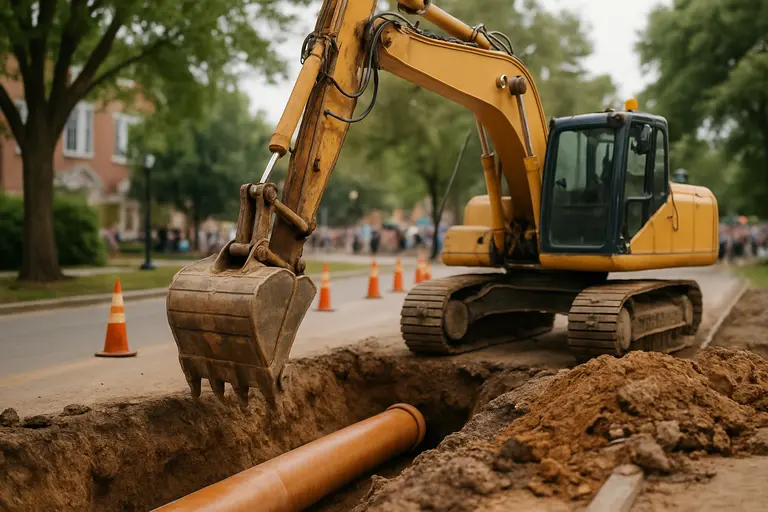
    Construction equipment near underground utility work

    Temporary Steps And Long-Term Needs

    Lifting the Sewer Capacity Moratorium did not create unlimited sewer capacity. The county’s own explanation tied the June 3 decision to temporary capacity borrowing, updated peak flow measurements, and planned capital work that will take several years. That makes the issue both immediate and long-range: three projects could move ahead, but the broader system still depends on engineering, construction, and funding decisions.

    For Anne Arundel County, the civic challenge is sequencing. Allowing development to proceed before utility improvements are complete can raise public concern, yet freezing all projects can affect housing, business investment, and property owners seeking permits. County officials have signaled that project review will continue within the limits of available capacity and the public works schedule.

    Why The Public Works Schedule Matters

    The projected November 2026 evaluation milestone gives residents a concrete date to watch. That evaluation is expected to inform the diversion work that the county said would take four to five years for design and construction. If the evaluation changes the scope, timing, or cost of the work, the effect could be felt in later project approvals.

    Public works projects of this kind rarely affect only engineers and developers. They influence where growth can occur, how local services are planned, and whether older sewer infrastructure can handle storms and peak demand. The June 3 lift answered one immediate question, but it left open many project-by-project decisions that residents may want to follow through county notices and meeting records.

    Anne Arundel Development Projects After The Lift

    For residents and applicants, the Sewer Capacity Moratorium story now shifts from a countywide pause in one service area to a more targeted review of allocations and infrastructure timing. The only projects publicly identified by status in the county’s June 3 announcement were three unnamed applications already in the review pipeline and ready for Department of Public Works allocations. No official list in the provided county announcement identified their names, types, or exact locations.

    That limitation is worth stating plainly. The public knows the number of first-cleared projects and the policy reason they could move ahead, but not the full project details from the cited announcement. Until Anne Arundel County releases project-level records or includes the applications in public meeting materials, residents should avoid assuming which developments were included. The practical next step is to monitor county planning and public works actions tied to sewer allocations in the Baltimore City Sewer Service Area, especially as the November 2026 evaluation deadline approaches.

  • The Arlington County CIP now on the books is not the $4.9 billion figure circulating in some non-official references. As of September 1, 2026, the verified county action is the Arlington County Board’s July 23, 2024 adoption of the FY 2025–FY 2034 Capital Improvement Plan totaling $5.2 billion, according to the county’s adopted capital plan. That distinction matters for residents because the plan sets the county’s long-term direction for transportation, utilities, stormwater, parks, public buildings and Arlington Public Schools facilities.

    The plan does not mean every project is already under construction. It is a 10-year funding and planning document that organizes priorities, estimates costs and helps guide future public decisions. For households, civic associations and business owners, the key question is practical: which public assets are being funded, how much is assigned, and where residents can keep participating as projects move from planning to delivery.

    What Changed In The Arlington County CIP

    Arlington County CIP Facts Residents Can Verify

    The adopted plan covers fiscal years 2025 through 2034 and is part of a county process updated every two years. The plan identifies major infrastructure projects and funding needs across several service areas, including Metro and transportation, utilities and stormwater, parks and recreation, public facilities and schools. The research reviewed for this article supports the $5.2 billion adopted total, not a $4.9 billion adopted plan.

    The county also reported that more than 3,100 community members provided input before the Board adopted the plan. That level of participation is significant because the CIP affects everyday services that residents use without always seeing the planning work behind them: road and bridge work, school building repairs, park improvements, stormwater controls, public safety buildings and county facility maintenance.

    The Arlington County CIP also included financial guidance aimed at conservative budget estimates, monitoring economic and construction market volatility, and managing debt in line with policies tied to Arlington’s bond rating. For residents, that means the plan is not just a wish list. It also reflects choices about how much debt the county is willing to carry and how officials intend to balance infrastructure needs against long-term financial stability.

    Why $4.9 Billion Is Not The County Figure

    The topic has appeared in some places as a $4.9 billion plan, but the research provided for this report found no official Arlington County source confirming a $4.9 billion adopted CIP as of September 1, 2026. The verified county document is the adopted FY 2025–FY 2034 plan totaling $5.2 billion. If a separate draft, partial project list or future planning scenario uses $4.9 billion, it was not confirmed in the official county materials reviewed here.

    That clarification is not a minor bookkeeping point. A difference of hundreds of millions of dollars can change how residents understand transportation commitments, utility work, school facility needs and public debt. Local budget discussions rely on exact figures, especially when bond questions, department work plans and project sequencing are involved.

    Where Arlington County CIP Dollars Are Assigned

    Transportation, Metro And High-Growth Corridors

    The largest category in the research is Metro and transportation, with $2.25 billion allocated over the 10-year plan. That includes about $398.5 million for Metro-related obligations and roughly $1.86 billion for transportation projects. The project areas identified in the research include bridge renovations, transit facilities, ADA improvements, and streets and stations in high-growth corridor areas such as Crystal City and Columbia Pike.

    For residents, the Arlington County CIP is less abstract in places where transportation work affects commutes, bus access, pedestrian safety, curb space and access to Metro. The research does not provide a construction calendar for each transportation project, so it would be inaccurate to state which neighborhoods will see work on specific dates without separate county project notices. What the adopted plan does show is that transportation remains a major long-term commitment in Arlington’s capital planning.

    Utilities, Stormwater And Water Quality

    The Utilities and Stormwater category totals approximately $1.21 billion over 10 years. The research breaks that into $879.9 million for utility maintenance, treatment improvements, redundancy and resiliency, and $334.4 million for capacity improvements, stream work and water quality efforts.

    Those investments connect to core services residents expect to work every day: clean water delivery, sewer infrastructure and stormwater systems that can handle rainfall. The research does not describe specific flood-control outcomes or project-by-project engineering schedules, so those details should be checked through county project pages or public works notices when individual projects advance.

    What Residents May Notice By Service Area

    Schools, Parks And County Buildings

    Arlington Public Schools’ portion of the plan totals about $691.06 million over 10 years. The research identifies school-related items such as kitchen upgrades, security improvements, roof and HVAC replacements, and synthetic turf fields. These are capital needs tied to school facilities rather than classroom operating expenses.

    Parks and Recreation is assigned $308.8 million for projects such as trail and bridge modernization, synthetic turf replacement, land acquisition and implementation of Park Master Plans. Public and government facilities funding covers maintenance and upgrades for county-owned buildings. The research identifies 89 buildings totaling more than 2.3 million square feet, with work areas including energy updates, electric vehicle charging infrastructure and facility condition improvements related to courts and public safety.

    • Metro and transportation: $2.25 billion, including Metro obligations and transportation projects.
    • Utilities and stormwater: About $1.21 billion for water, sewer, stormwater, capacity and water quality work.
    • Parks and recreation: $308.8 million for trails, bridges, turf, land and Park Master Plan work.
    • Arlington Public Schools: About $691.06 million for facility upgrades and replacements.
    • Public and government facilities: Building maintenance and upgrades across 89 county-owned buildings.

    Daily Impacts Without Overstating The Schedule

    Residents may experience the plan through future construction notices, public meetings, school facility work, park project planning and transportation updates. The research does not establish exact dates for those local impacts, so residents should treat the adopted plan as the funding framework, not a neighborhood-by-neighborhood construction alert.

    Houston LWS Forum is a related civic site in our network that covers local public issues in a different community. Arlington residents, however, should rely on official Arlington County and Arlington Public Schools notices for project-specific dates, meeting materials, and facility updates associated with this plan.

    How Public Input And Bond Questions Fit

    Residents seated in a public meeting room

    Community Input Before Adoption

    The county’s report that more than 3,100 community members provided input shows how public feedback was part of the adopted plan before the July 23, 2024 Board action. Civic associations, advisory groups, parents, commuters, park users and utility customers all have a stake in how capital dollars are sequenced because the plan reaches into many parts of daily life.

    Input does not guarantee that every requested project receives immediate funding. It does, however, create a public record of community priorities. In capital planning, that record can shape how elected officials and county staff weigh competing needs across transportation, parks, schools, public facilities and underground infrastructure.

    Bond Questions Authorized In 2024

    The County Board also authorized five bond referendum questions for the November 2024 ballot to fund portions of the plan. The research identifies about $72.4 million for Metro and transportation, $25.8 million for parks and recreation, $76.15 million for community infrastructure, $14.22 million for utilities and $83.98 million for schools.

    Because November 2024 has already passed as of September 1, 2026, those questions should be discussed in past tense. The research provided here confirms that the Board authorized the questions, but it does not include official election results. Residents reviewing the effect of those bond questions on current capital funding should check Arlington’s official election and budget records before drawing conclusions about voter approval or project timing.

    Arlington County CIP Civic Next Steps

    How Residents Can Track What Happens Next

    The Arlington County CIP will matter most as individual projects move through department planning, design, procurement, construction and facility work. Residents should watch for county budget materials, Board agendas, Arlington Public Schools facility updates, transportation project pages and public works notices tied to specific streets, buildings, parks and utility projects.

    For civic groups, the best next step is to connect the adopted funding categories to specific local concerns. A neighborhood near a corridor project may focus on pedestrian access and construction coordination. Parents may follow school HVAC, roof or security projects. Park users may track trail, bridge and turf work. Utility customers may watch stormwater and water quality planning. The adopted $5.2 billion figure gives residents the accurate starting point for those local questions.

    The clearest takeaway is that Arlington’s adopted capital plan is large, long-range and service-focused. It is also specific enough for residents to ask sharper questions: which project, which fiscal year, which department, which public meeting and which funding source. That is the civic value of correcting the number from $4.9 billion to the verified $5.2 billion plan.

  • On June 11, 2026, Pittsburgh Water approved a $6.76 million construction contract for a joint project with the City of Pittsburgh aimed at reducing neighborhood flooding in Carrick and Overbrook. The Pittsburgh Flood Project, formally identified in city materials as the Stewart Avenue Stormwater Improvements Project, is in its construction window as of August 28, 2026, with work expected to run through September 2027, according to the City of Pittsburgh announcement.

    The investment has been described publicly as a $6.8 million effort to reduce flooding and improve stormwater management in two South Pittsburgh neighborhoods, with CBS Pittsburgh reporting on the planned upgrades for Carrick and Overbrook. The work matters to residents because recurring street flooding can affect homes, sidewalks, travel routes, and emergency access during heavy rain. For a civic project of this length, the main questions are practical: where the work is concentrated, what infrastructure is being replaced or added, who is paying for each part, and how residents can follow public updates while construction continues.

    Readers who want additional regional coverage within the network can visit the Richland Chamber for more insights. In Pittsburgh, the public agencies leading this effort are the City of Pittsburgh and Pittsburgh Water, and the project area is centered on streets that feed into the Saw Mill Run watershed.

    What The Pittsburgh Flood Project Covers

    June 11 Approval

    The June 11 approval by Pittsburgh Water moved the joint city-water authority effort from planning toward construction. The public materials identify the project as a coordinated investment rather than a single-purpose paving job. Its stated purpose is to reduce recurring localized flooding, improve stormwater management, and keep water off streets and away from homes during heavy rainfall.

    That distinction is significant for Carrick and Overbrook residents because the project joins underground drainage work with surface improvements. New stormwater infrastructure can change how runoff moves through the neighborhood, while roadway and sidewalk work can address conditions residents encounter at street level. The city’s description links the project to the Saw Mill Run watershed, which makes the effort part of a broader drainage concern rather than only a block-by-block repair.

    Pittsburgh Flood Project Timeline

    The Pittsburgh Flood Project was expected to begin construction in July 2026 and conclude in September 2027. Because today is August 28, 2026, the project should be treated as an active, multi-month construction effort rather than an upcoming announcement. The long timeline also means residents may see different phases of work at different points along Stewart Avenue and nearby streets before the fall 2027 completion target.

    Public infrastructure schedules can shift because of weather, utility conflicts, material needs, or field conditions uncovered after work begins. The available official information supports the construction window and the planned scope, but it does not provide a street-by-street daily schedule in the research materials supplied here. Residents should rely on City of Pittsburgh and Pittsburgh Water notices for any specific lane, sidewalk, parking, or access changes tied to active construction days.

    Where Work Is Focused

    Stewart Avenue And Side Streets

    The named work area includes Stewart Avenue between Saw Mill Run Boulevard and Parkdale Street. The project also includes parts of Parkdale Street, Esther Way, Horning Street, and Carol Circle. These are the locations residents should watch most closely for construction staging, posted restrictions, and field activity connected to stormwater upgrades.

    Stewart Avenue’s connection to Saw Mill Run Boulevard makes the corridor especially relevant for drivers and nearby households. Saw Mill Run Boulevard is a major route through the area, and side-street drainage issues can affect how water moves toward larger roadways and lower-lying areas. The project’s focus on both main and side streets reflects the way neighborhood flooding often depends on a connected drainage system, not only on one visible trouble spot.

    Stormwater Work And Street Repairs

    The official project description lists several major components:

    • Installation of a new storm sewer system.
    • New catch basins and manholes.
    • Green infrastructure elements.
    • Roadway and sidewalk improvements.

    Catch basins and storm sewers are central to moving rainwater off streets. Manholes provide access for inspection and maintenance. Green infrastructure can help manage runoff closer to where rain falls, depending on the specific design used at each location. Roadway and sidewalk work can restore public space affected by underground construction and may improve everyday travel conditions after utility work is complete.

    How The Partnership Is Funded

    Shared Responsibilities

    The funding split is described by project partners in a clear way: Pittsburgh Water is responsible for storm sewer and green infrastructure work, while the City of Pittsburgh is responsible for roadway and sidewalk improvements. Other project costs are to be shared equally. That structure matters because it shows how the project crosses agency responsibilities. Stormwater systems, streets, and sidewalks may be experienced by residents as one neighborhood problem during heavy rain, but they often fall under different public functions.

    For taxpayers and ratepayers, the division of responsibility is a key accountability point. Residents can ask which agency is responsible for a given portion of the work if questions arise about construction sequencing, restoration, or maintenance after completion. Clear responsibility also helps public officials explain how funds are being used and why a joint agreement was needed for a project that includes both water management and transportation-related repairs.

    Why The Watershed Matters

    The project is tied to stormwater management in the Saw Mill Run watershed. A watershed-based approach recognizes that rainfall does not follow neighborhood borders. Water flows according to grade, drainage paths, pipes, inlets, and stream systems. Work in Carrick and Overbrook can be relevant not only for the blocks named in the project area, but also for how runoff is handled as it moves through the larger drainage network.

    The stated goal is not to eliminate every possible water problem during every storm. The supported claim is narrower and more specific: the work aims to reduce recurring localized flooding, keep water off streets and away from homes during heavy rain, and improve stormwater management. That is the standard residents should use when reviewing progress and asking questions during the construction period.

    Resident Impacts And Civic Follow-Up

    Neighbors walking near a posted street construction area

    How Residents Can Track Notices

    Residents along Stewart Avenue, Parkdale Street, Esther Way, Horning Street, and Carol Circle have the strongest reason to monitor project notices. People who drive through the corridor or use nearby sidewalks should also pay attention, since the planned work includes roadway and sidewalk improvements. The research available for this report does not include a full traffic-control plan, so any claim about closures, detours, or parking restrictions would be premature without a posted agency notice.

    The safest civic step is to follow official communications from the City of Pittsburgh and Pittsburgh Water during the active construction period. Residents can also raise practical questions through neighborhood meetings, public comment opportunities, or direct agency contact if notices identify a specific issue. Useful questions include when work will reach a block, how access will be maintained, how sidewalks will be restored, and how stormwater features will be maintained after construction.

    Why The Schedule Matters

    A July 2026 to September 2027 construction window means the project spans more than one heavy-rain period. That timing may test how temporary construction conditions and existing drainage patterns interact before the full system is complete. It also gives residents time to document recurring issues and communicate them to the responsible agencies while crews are still working in the area.

    For local government, the schedule creates a public accountability period. The agencies have identified the project area, purpose, major components, and cost-sharing structure. As the work continues, residents can compare field conditions with those public commitments. That kind of civic follow-up is especially important for stormwater projects, where many of the most expensive improvements are underground and may not be obvious once streets are restored.

    Civic Takeaways From The Pittsburgh Flood Project

    The Pittsburgh Flood Project is a targeted public works effort in Carrick and Overbrook, approved on June 11, 2026, with construction expected to continue through September 2027. Its core work includes storm sewers, catch basins, manholes, green infrastructure, road repairs, and sidewalk improvements in a defined set of streets near Stewart Avenue and Saw Mill Run Boulevard.

    The project’s civic importance rests in its practical promise: reducing repeated localized flooding and moving stormwater away from streets and homes during heavy rain. The public should judge the work by that stated purpose, the published schedule, and the responsibilities assigned to Pittsburgh Water and the City of Pittsburgh. For residents, the next step is steady attention to official notices and clear reporting of site-specific concerns while the work remains active.

  • Alexandria commuters received a major funding update for the Duke Street Transitway after the Northern Virginia Transportation Authority unanimously approved a $15 million allocation on July 9, 2026. The money was directed to Phase 2 of the project, which is planned along Duke Street between the King Street-Old Town Metro station and the city’s border with Fairfax County near the former Landmark Mall site. For residents who use buses, drive Duke Street, walk near Van Dorn Street, or track city transportation spending, the vote moved a long-discussed corridor project much closer to full funding.

    What $15M Means For The Duke Street Transitway

    Duke Street Transitway Funding Status

    The Duke Street Transitway moved closer to its budget target when NVTA approved the $15 million allocation on July 9, 2026. With that vote, total NVTA funding for the project reached $102 million against an estimated project cost of $102.5 million, leaving the project nearly fully funded, according to ALXnow’s report on the allocation. That funding status matters because Phase 2 includes physical changes at one of the corridor’s most important traffic and transit points: Duke Street at Van Dorn Street.

    The city has described Duke Street as a high-capacity transit corridor for years. According to Alexandria’s project materials, the Duke Street corridor was identified as one of the city’s three high-capacity transit corridors in the 2008 Transportation Master Plan, reaffirmed in the 2012 Transit Corridors Feasibility Study, and reaffirmed again in the 2021 Alexandria Mobility Plan. The city also reports that it has received about $87 million in non-City grant funding from NVTA for planning, design, and initial construction of the transitway through prior stages of the work, as detailed on the city’s Duke Street In Motion project page.

    What Phase 2 Money Covers

    The July 2026 allocation was tied to improvements at the Duke Street and Van Dorn Street interchange. Reported project elements include reconstruction of interchange ramps east of Van Dorn Street, installation of a missing sidewalk segment under the Van Dorn overpass, and a dedicated transit lane with a new signal for westbound Duke Street to Van Dorn Street. Those details place the funding decision in a very specific part of the corridor rather than in a general planning category.

    The estimated completion date for the project, based on the current planning and design phase described in the research record, is December 31, 2029. That date should be read as a planning estimate, not as a statement that construction is complete. As of August 27, 2026, the July NVTA action had already occurred, while the corridor improvements remained tied to future design and construction steps.

    How The Duke Street Corridor Would Change

    Four Miles Between Metro And The West End

    The planned work would create more than four miles of bus rapid transit lanes along Duke Street. The corridor is planned between the King Street-Old Town Metro station and Alexandria’s western border with Fairfax County near the former Landmark Mall site. That geography connects Old Town access, West End redevelopment activity, regional bus service, and daily vehicle travel on one of Alexandria’s major east-west roads.

    For commuters, the key public question is not only whether a bus lane is built. It is how the corridor functions during a normal morning or evening trip. The project materials point to changes that would affect buses, general traffic, pedestrians, and cyclists. Because Duke Street serves neighborhoods, commercial areas, Metro access, and the Van Dorn interchange, the practical effect of the project will depend on how those users share limited roadway space.

    Duke Street Transitway Travel Time Estimates

    Alexandria’s public project materials estimate travel time savings after completion. The city lists an estimated savings of about 9.5 minutes for eastbound buses, moving from roughly 25 minutes to about 15.5 minutes along the corridor. For other vehicles, the city lists an estimated savings of about 5 minutes, moving from roughly 19.5 minutes to about 14.5 minutes. These figures are planning estimates, but they give residents a measurable way to evaluate what the project is expected to deliver.

    The transit time estimate is especially relevant for bus riders who depend on reliable transfers, work start times, medical appointments, and school-related trips. The vehicle time estimate is also central to public discussion because Duke Street carries many drivers who may not ride the bus but still experience changes from signal timing, turn access, construction staging, and lane design. The city’s stated goal, based on its corridor planning materials, is to balance those interests rather than treat them as separate transportation questions.

    Resident Impacts Along The Duke Street Transitway

    Pedestrians walking near an overpass and traffic lanes

    Balancing Transit, Walking, Biking And Traffic

    Public concern around the corridor has centered on trade-offs among pedestrian improvements, bicycle access, transit performance, vehicle flow, and neighborhood access. The city’s materials identify issues such as convertible service roads, left-turn restrictions, and fewer bus stops as topics raised during planning. Those are not minor design details for people who live, work, or own businesses along Duke Street. A removed turn or changed bus stop can alter a daily routine, even when the broader project promises faster corridor travel.

    The missing sidewalk segment under the Van Dorn overpass is one example of how a transit project can also raise pedestrian access questions. Sidewalk gaps near interchanges can limit how safely people reach bus stops or nearby destinations. The proposed sidewalk work, paired with ramp reconstruction and a transit lane connection, shows that Phase 2 is not only about buses moving faster. It is also about whether people can move through a difficult interchange area without relying solely on a car.

    Why Van Dorn Matters To Daily Travel

    The Duke Street and Van Dorn Street interchange sits in a part of Alexandria where local trips and regional travel patterns meet. The reported improvements east of Van Dorn Street would affect ramps, a pedestrian connection, and westbound transit movement. That combination makes the interchange a civic focal point for the project. If the work proceeds as planned, commuters could see physical changes in how buses approach the interchange, how pedestrians move under the overpass, and how vehicles make selected movements through the area.

    Residents who want to track the public value of the funding can watch several specific items as the project advances:

    • whether the remaining estimated funding gap is closed after the $102 million in NVTA support toward the $102.5 million estimated cost;
    • how the final design treats left turns, service roads, bus stop spacing, sidewalks, and bicycle accommodations;
    • whether the December 31, 2029 estimated completion date changes during later project phases;
    • how construction staging is communicated to riders, drivers, nearby residents, and businesses along Duke Street.

    Duke Street Transitway Civic Checkpoints

    What Residents Can Watch Next

    As of August 27, 2026, the most concrete change was the July 9 NVTA funding approval. The project was not finished, and the completion estimate remained December 31, 2029. That distinction is important for public accountability. A funding vote reduces financial uncertainty, but residents still have reason to follow design details, construction timing, and communications from the City of Alexandria as the corridor moves through later steps.

    The project is also a reminder that transportation decisions are local quality-of-life decisions. A bus rider may judge the work by whether the eastbound trip becomes closer to the city’s 15.5-minute estimate. A driver may judge it by whether vehicle travel approaches the city’s 14.5-minute estimate. A pedestrian may focus on the sidewalk segment under the Van Dorn overpass. A nearby resident may focus on turns, service road access, or stop placement. Each of those measures is tied to the same corridor decision.

    Regional Context For Local Readers

    The Duke Street Transitway funding update fits into a wider pattern of regional transportation investment in Northern Virginia, but its day-to-day effects will be felt most directly in Alexandria. The civic task now is to keep the discussion grounded in the published scope: more than four miles of bus rapid transit lanes, targeted Van Dorn interchange improvements, reported travel time savings, and a nearly funded Phase 2 budget. Readers who are interested in related community developments and civic infrastructure coverage from connected community websites are encouraged to visit One United Michigan, a related site in the same network.

    For Alexandria residents, the practical question is not whether the July 2026 vote was significant. It was. The next question is whether the final design and construction process deliver the access, reliability, and safety benefits described in the public record while limiting avoidable disruption for the people who use Duke Street every day.

  • Los Angeles released its first-ever Capital Infrastructure Program on May 4, 2026, giving residents, neighborhood councils and city departments a single long-range planning document for streets, sidewalks, parks, curb ramps and public buildings. Mayor Karen Bass described the program as a unified plan for how the city will plan, finance, build and maintain public infrastructure, according to the Mayor’s May 4 release. The change matters for Angelenos because repairs and public-space investments have often been discussed across separate budgets, department work plans and project lists.

    What The Capital Infrastructure Program Changes

    Why City Hall Created A Single Plan

    The new plan was developed after Mayor Bass issued Executive Directive No. 9 on October 16, 2024. That directive called on city departments to improve infrastructure delivery, align coordination and create a Capital Planning Steering Committee. It also called for a new capital infrastructure plan that would replace portions of the older Capital and Technology Improvement Program tied to physical plant and public right-of-way work.

    For residents, the practical change is not a single construction project but a new structure for decision-making. Instead of treating street repairs, park work, sidewalk access and public building needs as isolated requests, the city is trying to put those needs into one planning process. That could help council offices, departments and residents compare needs across neighborhoods, even though the city has not released every project detail in the research materials provided here.

    Capital Infrastructure Program Priorities

    The city’s scale is central to the plan. Los Angeles has more than 7,500 miles of streets, and the Mayor’s Office used the city’s combined sidewalk mileage as an example of the size of the maintenance challenge. The city also reported that Los Angeles spent more than $860 million on public infrastructure in fiscal year 2022-2023, including capital projects and investments in the public right-of-way.

    The first plan also ties local capital work to the 2028 Olympic and Paralympic Games. The Mayor’s Office said the program includes 29 Olympic and Paralympic legacy capital projects. At the time of the May 2026 release, 16 of those projects were funded in the proposed fiscal year 2026-2027 budget. City officials framed those projects as both Games preparation and lasting community investment, a point residents may want to follow closely as project scopes, timelines and neighborhood impacts become clearer.

    How Projects Will Be Ranked And Funded

    Ten Recommendations For City Departments

    The Department of Public Works says the plan sets out 10 recommendations, including building better project lists, documenting current and past investments, forecasting maintenance needs, improving governance, reforming project intake, scoring projects, ensuring staffing and maintenance commitments, and expanding funding, according to the city’s Capital Infrastructure Program page. Those recommendations are aimed at making infrastructure requests easier to track from proposal to completion.

    That scoring and intake work will be especially important in a city where sidewalk access, street condition, park maintenance and building needs compete for limited public dollars. The program does not remove the need for elected officials to make budget choices. It does, however, creates a public framework for asking why one project is ready for funding while another remains in planning, design or unfunded status.

    2028 Games Work In The First Plan

    One recommendation specifically calls for prioritizing 2028 Games-related capital projects in the first plan. That does not mean every neighborhood project is a Games project, and the materials provided do not show that every funded item is tied to Olympic or Paralympic activity. The civic question is how the city balances event-readiness with daily infrastructure needs that residents already experience on sidewalks, at parks and along local corridors.

    Residents should watch whether legacy projects deliver public benefits after the Games. The phrase “legacy” carries a public promise: that capital spending should leave useful improvements in place after visitors and athletes leave. For neighborhood councils, business districts and community groups, the next useful step is to compare published project lists against local needs and ask city departments how maintenance will be funded after construction is finished.

    What Residents Can Track

    Residents walking near a curb ramp and crosswalk on a Los Angeles street

    Streets, Sidewalks And Parks

    Los Angeles already tracks street condition through its Pavement Condition Index. The research materials provided for this report show the city’s PCI stood at 69 in fiscal years 2021-2022 and 2022-2023. That figure points to pavement that is neither at the highest condition level nor in the worst category citywide, while still indicating that maintenance needs remain across many areas.

    Sidewalks, curb ramps and parks are equally important because they shape how residents reach bus stops, schools, libraries, senior centers, recreation space and small businesses. A planning document becomes meaningful only when residents can see whether the city is repairing dangerous gaps, improving access for people with disabilities and keeping public spaces usable after ribbon cuttings. Those local outcomes should be part of every budget hearing and department update tied to the program.

    Where To Follow Public Works Updates

    Residents can use several civic channels to track the plan without waiting for construction crews to arrive on a block. City budget hearings, council committee agendas, Board of Public Works updates and department budget documents can show whether a project is funded, delayed, rescoped or moved into construction. Neighborhood councils can request presentations from city departments when a project affects streets, sidewalks, parks or public buildings in their area.

    • Ask whether a local project is funded, planned or still unfunded.
    • Request the expected maintenance plan after construction is complete.
    • Compare project scoring with documented safety, access and repair needs.
    • Track whether 2028-related projects provide lasting neighborhood benefits.

    For readers who are interested in exploring more about civic improvements and public infrastructure measures in the region, you can find related insights on ITPR. The same basic questions apply in any city: who sets priorities, how work is funded, how the public can track progress and whether completed projects are maintained after opening day.

    Capital Infrastructure Program And Local Accountability

    The Capital Infrastructure Program gives Los Angeles a new planning tool, but its value will depend on public follow-through. Residents, neighborhood councils, business groups and disability access advocates will need clear project lists, realistic schedules and plain budget updates. City departments will need to show how projects move from intake to scoring, funding, construction and maintenance.

    As of August 27, 2026, the program’s release was a completed action, not an upcoming event. The next civic work is tracking how the plan is used in budgets and department decisions over the next several years. For a city of nearly 4 million residents across about 470 square miles, the stakes are practical: safer streets, usable sidewalks, maintained parks and public buildings that meet community needs.

  • The Howard County Budget approved by the Board of Education on May 21, 2026, set the school system’s spending plan for the 2026-2027 school year, with major attention on special education and school facilities. The adopted Fiscal Year 2027 General Fund Operating Budget totals $1.286 billion, an increase of $69.4 million, or 5.7%, over FY 2026, according to the HCPSS budget notice. For families, school employees and county taxpayers, the decision now moves from budget adoption to implementation, where staffing, construction planning and facility work will determine how the approved dollars are felt in classrooms and buildings.

    What The Howard County Budget Changed

    Howard County Budget Numbers For FY 2027

    The FY 2027 school spending plan is built around both operating costs and capital needs. The operating side covers the school system’s general fund expenses for the school year. The capital side sets money for building projects, renovations and facility systems. Taken together, the adopted budgets show the Board of Education’s effort to fund day-to-day instruction while also addressing building needs that have been named in the capital plan.

    The Howard County Budget includes $871.5 million in county funding for the operating budget, which is $55.5 million, or 6.8%, more than FY 2026. State funding for FY 2027 is $393.3 million, an increase of $17.2 million, or 4.6%, over FY 2026. Those figures matter locally because they show how school funding relies on both county and state support, with county dollars making up the larger named share in the adopted operating budget.

    Budget AreaFY 2027 Adopted AmountReported Change Or Source
    General Fund Operating Budget$1.286 billionUp $69.4 million, or 5.7%, from FY 2026
    County Operating Funding$871.5 millionUp $55.5 million, or 6.8%, from FY 2026
    State Operating Funding$393.3 millionUp $17.2 million, or 4.6%, from FY 2026
    Capital Budget$122.7 million$98.6 million county funding and $24.1 million state funding

    Capital Projects Approved For School Facilities

    School Sites Named In The Capital Plan

    The FY 2027 Capital Budget totals $122.7 million. HCPSS reported that the capital plan includes $98.6 million in county funding and $24.1 million from the state. The named projects point to the practical side of the budget: school systems, building conditions, early learning space and gym air conditioning.

    Projects advanced under the approved capital budget include Built to Learn Act multi-systemic projects at Bonnie Branch Middle School and Worthington Elementary School. The plan also includes HVAC renovation projects at Atholton Elementary School and Jeffers Hill Elementary School. HCPSS also listed continued funding for Faulkner Ridge Early Learning Center and installation of air conditioning in multiple school gyms.

    For residents, these capital items are worth tracking because they connect public dollars to specific school sites. Facility budgets can affect student comfort, building operations and how schools use space during the instructional day. The adopted plan names the schools and project types, but project schedules, construction sequencing and on-site impacts should be checked through HCPSS materials as work moves forward during the fiscal year.

    Special Education Funding And Staffing

    Positions And Program Capacity

    Special education is one of the clearest priorities in the adopted funding picture. A county economic mobility update reported that the FY 2027 operating budget includes $207 million for special education, representing about a 90% increase in special education funding since FY 2019, and that 64 new special education positions were added for FY 2027, according to the county economic mobility update. Those figures place special education at the center of the school system’s FY 2027 implementation work.

    The Howard County Budget decision does not, by itself, show how each position will be assigned by school, program or grade level. The adopted figures do show that the Board of Education and school system planned for added staffing capacity in this area. Families who receive special education services will likely pay close attention to whether approved positions improve service delivery, staff availability and program access during the 2026-2027 school year.

    Special education spending also connects to facility planning. Students and staff need appropriate space, transportation capacity and building systems that support program delivery. The research provided for this report does not include school-by-school assignment details for the 64 new positions, so any claims about specific staffing changes at individual schools would be premature without further HCPSS documentation.

    Funding Sources And Local Oversight

    Public meeting room with budget binders arranged for review

    Why The County And State Shares Matter

    The adopted budget shows that Howard County government and the State of Maryland both remain central to school funding. County funding is listed at $871.5 million for the operating budget, while state funding is listed at $393.3 million. On the capital side, the $122.7 million budget includes $98.6 million from county funding and $24.1 million from the state.

    That split gives residents several points of civic oversight. School board budget decisions, county funding decisions and state support all affect what HCPSS can pay for in a given fiscal year. The Board of Education’s May 21 adoption established the approved school system plan, but implementation depends on how funds are managed across departments, schools and capital projects.

    Residents following local budget decisions can compare adopted figures with later board materials, project updates and school system communications. For readers interested in keeping up with public spending and county governance, County Watchers offers an insightful resource within the same network for civic coverage.

    Howard County Budget And Community Accountability

    Records Residents Can Track

    The Howard County Budget now stands as the FY 2027 spending framework for HCPSS. The most concrete items for residents to monitor are the $1.286 billion operating budget, the $207 million special education allocation, the 64 added special education positions, and the $122.7 million capital budget tied to named facility work.

    Families and taxpayers do not need to wait for a new budget cycle to follow how the plan is carried out. The key civic questions are specific: whether special education positions are filled, how capital projects at Bonnie Branch Middle School, Worthington Elementary School, Atholton Elementary School and Jeffers Hill Elementary School progress, and how gym air conditioning work is scheduled across schools. The adopted budget provides the baseline. Public reporting during the 2026-2027 school year will show how closely implementation matches the plan approved on May 21, 2026.

  • The AACPS budget adopted by the Anne Arundel County Board of Education on June 18, 2026, set the school system’s Fiscal Year 2027 spending plan at $1.87 billion for operations and $174 million for capital work. The plan took effect on July 1, 2026, and it directs money toward employee compensation, special education staffing, two new school facilities, and several construction and study items, according to the district’s district budget announcement.

    For Anne Arundel County households, the action matters because it shapes school staffing, pay, classroom support, and building schedules during the fiscal year that began on July 1, 2026. The adopted budget does not answer every facility or staffing question on its own, but it does identify the board’s funded priorities for the year now underway. It also gives families, employees, and civic groups a clearer public record to track as school projects and personnel decisions move through the year.

    What The AACPS Budget Changed

    AACPS Budget Vote And Effective Date

    The Board of Education adopted the spending plan on June 18, 2026. The operating side totals $1.87 billion, while the capital side totals $174 million. Both parts of the plan officially took effect on July 1, 2026. That timing means the budget is no longer a proposal as of August 25, 2026. It is the active financial framework for Anne Arundel County Public Schools in Fiscal Year 2027.

    The operating budget covers the day-to-day work of the school system, including staff compensation and program support. The capital budget focuses on buildings, school construction, and facility planning. By approving both together, the board set a single public spending direction for the school year and for the construction work listed in the capital plan.

    Pay, Staffing, And School-Level Support

    The adopted plan includes compensation increases for all employees. The district reported that employees receive a step or step-equivalent raise plus a 2.25% cost-of-living adjustment. Temporary Support Assistants also receive a higher hourly rate of $18 per hour, with about $1 million used to fund that change.

    The budget also sets aside nearly $1.9 million in stipends for National Board Certified teachers. For special education, the plan provides about $4.6 million to sustain teaching positions that had previously been left unfunded by state grants. Those two items are separate from the broad compensation increases, and they point to specific workforce needs identified in the adopted plan.

    How Pay Funding Reaches School Employees

    Retention Context For Instructional Staff

    The district reported retention rates during the just-concluded school year of nearly 96% for instructional employees and over 94% for non-instructional employees. Those figures provide a useful starting point for residents following whether compensation spending lines up with the district’s staffing needs. The adopted increases apply to all employees, not only to classroom teachers, and that makes the pay section one of the broadest parts of the Fiscal Year 2027 plan.

    The AACPS budget also separates several categories of employee support. A step or step-equivalent raise and a 2.25% COLA reach the full employee base. The Temporary Support Assistant rate change is targeted to one hourly group. National Board Certified teacher stipends are tied to a professional credential. Special education funding is aimed at sustaining teaching positions that had been tied to grant funding. Each category gives employees and families a different item to watch as the fiscal year proceeds.

    What Residents Can Track

    Families and staff members do not need to wait for another budget cycle to follow these items. They can compare the adopted funding categories with public updates from board meetings, school system notices, and future budget documents. For example, residents may want to ask how the $18 hourly rate for Temporary Support Assistants affects hiring and coverage at schools, or how the special education teaching-position funding is reflected in services during the year.

    Readers who follow school and community coverage across other areas may also consult related civic reporting through Saint Joseph Detroit, a site within the same network. In Anne Arundel County, the local record to follow remains the school board’s adopted budget, public meetings, and district updates tied to Fiscal Year 2027 spending.

    School Construction And Opening Costs

    Construction equipment near a school building project site

    New Facilities Opening In The Fall

    The adopted budget includes about $5.2 million to open two new facilities in the fall: Carver Early Education Center and New Village Academy, a public charter school. The budget item does not, by itself, describe all opening details, staffing assignments, or enrollment effects. It does confirm that the board funded costs tied to bringing those two facilities online during the Fiscal Year 2027 period.

    For nearby families, opening costs are often one of the first budget items they feel directly because they connect to building readiness, school operations, and service delivery. The adopted plan identifies the funding amount and the two named facilities, giving residents a specific line of inquiry for future board meetings and district updates.

    Old Mill, Field Houses, And Facility Studies

    On the capital side, the plan directs over $89 million toward continued construction of the new Old Mill High School and Old Mill Middle School North. It also includes $9.1 million for field houses at Arundel High School and Chesapeake High School. Those are among the most specific school construction figures in the adopted capital plan.

    The capital budget also includes feasibility studies for Ruth Parker Eason School, Arundel Middle School, Riviera Beach Elementary School, Chesapeake Bay Middle School/Bodkin Elementary School, and Van Bokkelen Elementary School. A feasibility study is not the same as a final construction approval. Based on the adopted budget information, these studies indicate that the school system is funding early planning work for those sites in Fiscal Year 2027.

    The AACPS budget places those construction and study items beside the operating spending, which helps residents see both immediate school operations and longer-term facility work in one adopted plan. That matters for communities where building needs, enrollment questions, and program placement can shape daily school life.

    AACPS Budget Civic Watch Points

    AACPS Budget Questions For Public Meetings

    As the AACPS budget moves through the fiscal year that began on July 1, 2026, residents have several grounded questions they can raise through public meetings, school system contact channels, and budget follow-up sessions. The adopted figures give the public a factual base for those questions without relying on rumor or informal estimates.

    • How will the district report the effect of step or step-equivalent raises and the 2.25% COLA on employee retention?
    • How will the $18 hourly rate for Temporary Support Assistants be reflected in staffing levels during the school year?
    • What public updates will be provided on the $4.6 million used to sustain special education teaching positions?
    • When will residents receive updates on construction progress for the new Old Mill High School and Old Mill Middle School North?
    • How will the feasibility studies for the named schools be shared with affected school communities?

    The adopted Fiscal Year 2027 plan is now the reference point for those conversations. It includes clear dollar amounts, named facilities, and specific employee compensation provisions. For civic-minded residents, the next useful step is not speculation; it is tracking how the board and school system report progress against the adopted budget during the year.

    The AACPS budget approved on June 18, 2026, ties employee pay, special education staffing support, new facility openings, and capital construction into one public spending plan. Its effects will be measured through implementation: whether funded positions are sustained, whether opening costs support the two named facilities, and whether capital projects and studies remain visible to the communities they affect.

  • The final week of August 2026 brings major administrative decisions to the Trinity Peninsula. County leaders finalized a balanced budget following intensive departmental reviews, and Trinity Independent School District (ISD) is rolling out its fall schedule under new leadership. Tracking these developments in today’s Trinity County local news update provides local business owners and residents with a clear view of how municipal spending and educational priorities shape the regional economy heading into the fall.

    Friday Night Lights and Fall Sports

    The fall sports season is officially underway. High school football returns this week, driving major community participation across East Texas. The Trinity Tigers open their non-district schedule, generating immediate revenue for local convenience stores and restaurants as fans travel to support the team. As locals pack the high school stadiums, many residents monitor the broader collegiate and professional sports landscape. Sports enthusiasts looking to track upcoming weekend games often compare football odds at JustBet to stay engaged with regional matchups. The return of football delivers a reliable economic boost to the hospitality sector throughout the autumn months.

    Commissioners Court Approves Balanced Budget

    The Trinity County Commissioners Court successfully reached a balanced budget for the upcoming fiscal year without enacting a tax increase. County Judge Danny Martin led the effort during recent August workshops, requiring financial reductions across all municipal departments. The county auditor confirmed that most offices received cuts limited to basic supplies. Larger structural savings came from adjusting law enforcement operations.

    Officials reduced the inmate housing allocation to $1.1 million, generating $200,000 in immediate savings. The court opted against pursuing a $5 million state grant intended for jail expansion. Commissioners determined the upfront costs of nearly $12 million and the long-term staffing requirements made the project financially unworkable right now. Business owners interested in tracking how local tax structures align with state mandates can review public financial resources at the Texas Comptroller of Public Accounts portal.

    During these budget workshops, the court addressed community concerns regarding the local AgriLife Extension Office. Following public comments supporting the program, commissioners firmly stated the county has no intention of closing the office. Maintaining this facility protects the educational resources relied upon by roughly 200 local 4-H members. Keeping these youth agricultural programs active supports the future farming and ranching workforce on the Trinity Peninsula.

    Commissioners implemented a new policy requiring all employee credit card expenditures to come before the court for approval. This change tightens internal accounting and increases transparency for taxpayer funds. The county then scheduled a community cleanup day for October 10, giving residents a chance to dispose of large waste items.

    The table below breaks down the primary financial decisions finalized by the court:

    Budget AreaCourt ActionEconomic Impact
    Property TaxesMaintained current ratePrevents new financial burdens on commercial real estate.
    Inmate HousingCut budget to $1.1 millionReallocates $200,000 in taxpayer funds.
    Jail ExpansionRejected $5 million grantAvoids massive upfront capital expenditures.
    AgriLife ExtensionKept office openProtects local agricultural youth programs.

    Trinity ISD Launches The Fall Semester

    Public education remains a central driver of daily commerce in Trinity County. Trinity ISD is officially opening the 2026-2027 academic year under the guidance of its new superintendent, Dr. Ben Petty. The district recently finalized the schedule for its highly anticipated “Meet the Teacher” and “Meet the Tigers” events.

    These campus gatherings create immediate opportunities for local retailers. When families attend school functions, they frequently purchase dinner at local restaurants and pick up last-minute supplies at regional hardware and grocery stores. Staying aligned with the academic calendar allows business operators to schedule extra staff during these predictable traffic surges. Parents and commercial vendors can find detailed graduation guidelines and state educational standards on the official Texas Education Agency website. High school athletics are ramping up quickly, bringing traveling fans and visitors into the city limits for Friday night games.

    Trinity County

    Extreme Heat Heightens Local Fire Risks

    As the school year begins, the region continues to suffer from a late-summer heat wave. High temperatures and dry conditions push the local fire danger to a critical level. Volunteer fire departments remain on high alert after responding to multiple grass fires over the past two weeks.

    Agricultural operators and commercial timber companies must monitor their heavy equipment to prevent accidental sparks. First responders warn that current weather patterns show no immediate signs of rain. Following burn bans strictly prevents localized environmental damage from escalating into broader threats against commercial properties. A single uncontrolled brush fire can threaten commercial structures and disrupt the flow of traffic on major county roads. Active awareness of these public safety and municipal developments keeps the Trinity Peninsula strong and prepared for the busy months ahead.

  • The D214 Bond Referendum moved from facilities planning to a formal ballot question on August 6, 2026, when Northwest Suburban High School District 214 board members voted to place a $295 million bond proposal before voters on November 3, 2026. The measure centers on building systems, safety work, accessibility, and classroom updates across seven campuses that were built between 1957 and 1973, according to the District 214 announcement.

    What Changed In The D214 Bond Referendum

    D214 Bond Referendum Timeline

    The board vote on August 6 did not approve borrowing by itself. It put the question on the November 3, 2026 ballot, where voters in the district will decide whether to authorize bonds for a 25-year term. The question is notable because District 214 has not asked voters for bond authorization in more than 50 years. The last such request came in 1971, when Buffalo Grove High School was built, according to the Daily Herald report.

    The timing gives residents more than two months from the board vote to review the proposal before Election Day. District materials described in the research show that engagement has already included broad surveys, small-group public feedback, and community committee meetings. In spring 2026, the third phase of that work narrowed the discussion to safety and security, infrastructure, mechanical systems, and instructional spaces.

    Why The Proposal Was Reduced

    District 214 reported that assessments and community input identified more than $800 million in possible renovations. The $295 million proposal now headed to the ballot represents a reduction of nearly two-thirds from that larger facilities list. District officials have framed the current proposal around highest-priority needs rather than every project identified during planning.

    The seven campuses included in the plan were built over a 16-year period, from 1957 through 1973. That age range matters for residents because roofs, windows, pavement, heating and cooling systems, plumbing, electrical systems, and boilers often require major replacement after decades of use. The district’s proposal also includes safety and accessibility work such as fire alarm systems, secure doors, card access, ADA-compliant bleachers, and elevators.

    Facilities Work Proposed Across Seven Campuses

    Safety, Access, And Building Systems

    The project categories released by the district focus on conditions that students, staff, families, and visitors encounter during the school day and at public events. Safety and security projects include fire alarm systems, secure doors, and card access. Accessibility items include ADA-compliant bleachers and elevators, which would affect students and visitors who rely on accessible routes or seating.

    Infrastructure work would cover roofs, windows, and pavement. Mechanical work would include HVAC, plumbing, electrical systems, and boilers. Those categories are not tied to one school in the research provided; they are described as districtwide needs across the seven campuses. The district also listed improvements to instructional spaces, including science labs, theaters, and STEAM classrooms.

    Classrooms And Public Spaces

    The instructional projects place the bond question squarely in front of families with current students, residents with future students, and taxpayers who use school buildings for performances, meetings, and community events. The proposal includes work in science labs, theaters, and STEAM classrooms. While the district has not provided every site-specific project detail in the research supplied here, the categories show that the proposal is not limited to back-of-house mechanical repairs.

    District 214 has also said projects excluded from the bond proposal because they were lower priority or deferred may still be addressed through district funds or later phases of facilities planning. That means the November 3 vote would not settle every long-term building question. It would decide whether the district may borrow for the current $295 million package.

    Tax Impact And Financial Context

    Estimated Annual Costs By Home Value

    For households weighing the D214 Bond Referendum, the tax impact estimates are a central part of the civic review. The Daily Herald reported these projected annual costs if voters approve the bond: $101 for a home valued at $250,000; $170 for a home valued at $396,500; $218 for a home valued at $500,000; and $335 for a home valued at $750,000. Those figures are estimates, and individual tax bills can vary based on assessed value and other taxing bodies.

    • $101 per year for a home valued at $250,000.
    • $170 per year for a home valued at $396,500.
    • $218 per year for a home valued at $500,000.
    • $335 per year for a home valued at $750,000.

    The proposal asks voters to authorize bonds over 25 years. A long repayment term can spread costs across many budget cycles, but it also creates a long-term obligation for taxpayers. Residents reviewing the measure may want to compare the projected cost against the stated project categories and the district’s current capital planning needs.

    District Financial Standing

    District 214 reported that it maintains an Aa1 bond rating and a 4.0 Illinois State Board of Education Financial Profile Score, which is the highest designation in the state. Those indicators do not determine how residents should vote, but they are part of the public record around the district’s borrowing capacity and financial position.

    The district’s financial standing will likely be part of the public information shared before the November 3 ballot question. Voters should distinguish between factual finance information and advocacy. The research notes state that district communications and engagement are informational and that, under Illinois law, the district may not explicitly urge voters to support the referendum.

    Community Engagement And Mailers

    Resident reading school district mail at a table

    Information Sessions And Tours

    The D214 Bond Referendum will be explained through resident communications that include a postcard announcing sessions and tours, a brochure detailing project proposals and costs, and a later postcard pointing residents to voting information. The research notes say about 106,000 addresses will be reached, with mailings scheduled from early September through late October 2026.

    Specific dates, times, and locations for the sessions and tours were not included in the research provided for this report. That limits what can be stated now. Residents should use official district communications, board materials, and election information to confirm session details once they are released. The role of those sessions is to help voters understand what is proposed, what it may cost, and which facilities needs were prioritized.

    Public Information Versus Campaigning

    School districts can provide facts about a referendum, including the ballot date, project categories, cost estimates, and tax impact. They cannot use public resources to tell voters to vote yes. That distinction matters in local school finance elections because residents should be able to separate public information from campaign messages that may come from outside committees or private groups.

    The mailers described in the research are expected to cover the proposal and direct residents to voting information. They are not described as advocacy pieces. For those interested in regional civic matters, the Richland Chamber site is part of a network that offers coverage on local business and public affairs.

    D214 Bond Referendum Civic Checklist

    The D214 Bond Referendum now moves into a public review period before the November 3, 2026 election. The key civic questions are direct: which projects are included, which projects were deferred, how the district selected its priorities, how the 25-year borrowing term would affect taxpayers, and how building needs would be addressed if voters reject the measure.

    Residents who want to prepare for the ballot can review the district’s official bond information, read the full project categories, compare the estimated annual tax impact with their own property value, and watch for the announced sessions, tours, and mailers. The decision rests with voters, but the public record already shows the central change: District 214 is asking for voter authorization for a $295 million facilities bond for the first time in more than half a century.