
The AACPS budget adopted by the Anne Arundel County Board of Education on June 18, 2026, set the school system’s Fiscal Year 2027 spending plan at $1.87 billion for operations and $174 million for capital work. The plan took effect on July 1, 2026, and it directs money toward employee compensation, special education staffing, two new school facilities, and several construction and study items, according to the district’s district budget announcement.
For Anne Arundel County households, the action matters because it shapes school staffing, pay, classroom support, and building schedules during the fiscal year that began on July 1, 2026. The adopted budget does not answer every facility or staffing question on its own, but it does identify the board’s funded priorities for the year now underway. It also gives families, employees, and civic groups a clearer public record to track as school projects and personnel decisions move through the year.
What The AACPS Budget Changed
AACPS Budget Vote And Effective Date
The Board of Education adopted the spending plan on June 18, 2026. The operating side totals $1.87 billion, while the capital side totals $174 million. Both parts of the plan officially took effect on July 1, 2026. That timing means the budget is no longer a proposal as of August 25, 2026. It is the active financial framework for Anne Arundel County Public Schools in Fiscal Year 2027.
The operating budget covers the day-to-day work of the school system, including staff compensation and program support. The capital budget focuses on buildings, school construction, and facility planning. By approving both together, the board set a single public spending direction for the school year and for the construction work listed in the capital plan.
Pay, Staffing, And School-Level Support
The adopted plan includes compensation increases for all employees. The district reported that employees receive a step or step-equivalent raise plus a 2.25% cost-of-living adjustment. Temporary Support Assistants also receive a higher hourly rate of $18 per hour, with about $1 million used to fund that change.
The budget also sets aside nearly $1.9 million in stipends for National Board Certified teachers. For special education, the plan provides about $4.6 million to sustain teaching positions that had previously been left unfunded by state grants. Those two items are separate from the broad compensation increases, and they point to specific workforce needs identified in the adopted plan.
How Pay Funding Reaches School Employees
Retention Context For Instructional Staff
The district reported retention rates during the just-concluded school year of nearly 96% for instructional employees and over 94% for non-instructional employees. Those figures provide a useful starting point for residents following whether compensation spending lines up with the district’s staffing needs. The adopted increases apply to all employees, not only to classroom teachers, and that makes the pay section one of the broadest parts of the Fiscal Year 2027 plan.
The AACPS budget also separates several categories of employee support. A step or step-equivalent raise and a 2.25% COLA reach the full employee base. The Temporary Support Assistant rate change is targeted to one hourly group. National Board Certified teacher stipends are tied to a professional credential. Special education funding is aimed at sustaining teaching positions that had been tied to grant funding. Each category gives employees and families a different item to watch as the fiscal year proceeds.
What Residents Can Track
Families and staff members do not need to wait for another budget cycle to follow these items. They can compare the adopted funding categories with public updates from board meetings, school system notices, and future budget documents. For example, residents may want to ask how the $18 hourly rate for Temporary Support Assistants affects hiring and coverage at schools, or how the special education teaching-position funding is reflected in services during the year.
Readers who follow school and community coverage across other areas may also consult related civic reporting through Saint Joseph Detroit, a site within the same network. In Anne Arundel County, the local record to follow remains the school board’s adopted budget, public meetings, and district updates tied to Fiscal Year 2027 spending.
School Construction And Opening Costs
New Facilities Opening In The Fall
The adopted budget includes about $5.2 million to open two new facilities in the fall: Carver Early Education Center and New Village Academy, a public charter school. The budget item does not, by itself, describe all opening details, staffing assignments, or enrollment effects. It does confirm that the board funded costs tied to bringing those two facilities online during the Fiscal Year 2027 period.
For nearby families, opening costs are often one of the first budget items they feel directly because they connect to building readiness, school operations, and service delivery. The adopted plan identifies the funding amount and the two named facilities, giving residents a specific line of inquiry for future board meetings and district updates.
Old Mill, Field Houses, And Facility Studies
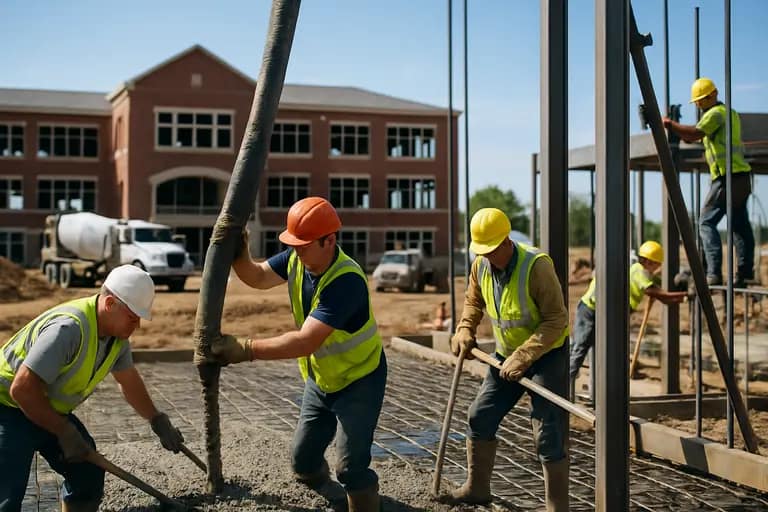
On the capital side, the plan directs over $89 million toward continued construction of the new Old Mill High School and Old Mill Middle School North. It also includes $9.1 million for field houses at Arundel High School and Chesapeake High School. Those are among the most specific school construction figures in the adopted capital plan.
The capital budget also includes feasibility studies for Ruth Parker Eason School, Arundel Middle School, Riviera Beach Elementary School, Chesapeake Bay Middle School/Bodkin Elementary School, and Van Bokkelen Elementary School. A feasibility study is not the same as a final construction approval. Based on the adopted budget information, these studies indicate that the school system is funding early planning work for those sites in Fiscal Year 2027.
The AACPS budget places those construction and study items beside the operating spending, which helps residents see both immediate school operations and longer-term facility work in one adopted plan. That matters for communities where building needs, enrollment questions, and program placement can shape daily school life.
AACPS Budget Civic Watch Points
AACPS Budget Questions For Public Meetings
As the AACPS budget moves through the fiscal year that began on July 1, 2026, residents have several grounded questions they can raise through public meetings, school system contact channels, and budget follow-up sessions. The adopted figures give the public a factual base for those questions without relying on rumor or informal estimates.
- How will the district report the effect of step or step-equivalent raises and the 2.25% COLA on employee retention?
- How will the $18 hourly rate for Temporary Support Assistants be reflected in staffing levels during the school year?
- What public updates will be provided on the $4.6 million used to sustain special education teaching positions?
- When will residents receive updates on construction progress for the new Old Mill High School and Old Mill Middle School North?
- How will the feasibility studies for the named schools be shared with affected school communities?
The adopted Fiscal Year 2027 plan is now the reference point for those conversations. It includes clear dollar amounts, named facilities, and specific employee compensation provisions. For civic-minded residents, the next useful step is not speculation; it is tracking how the board and school system report progress against the adopted budget during the year.
The AACPS budget approved on June 18, 2026, ties employee pay, special education staffing support, new facility openings, and capital construction into one public spending plan. Its effects will be measured through implementation: whether funded positions are sustained, whether opening costs support the two named facilities, and whether capital projects and studies remain visible to the communities they affect.
Leave a Reply