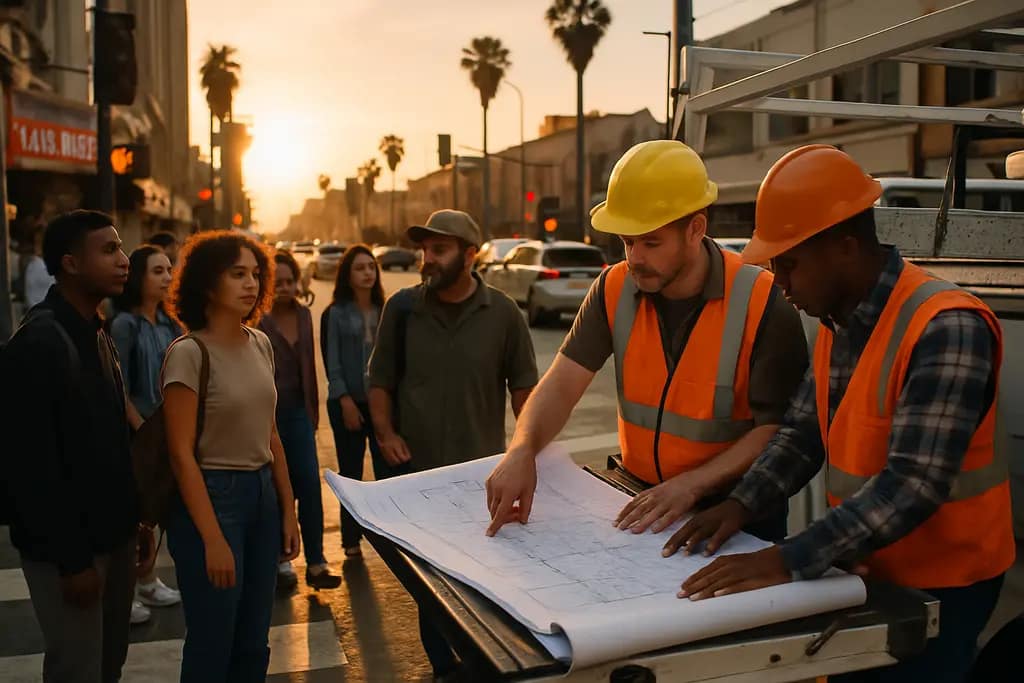
Los Angeles released its first-ever Capital Infrastructure Program on May 4, 2026, giving residents, neighborhood councils and city departments a single long-range planning document for streets, sidewalks, parks, curb ramps and public buildings. Mayor Karen Bass described the program as a unified plan for how the city will plan, finance, build and maintain public infrastructure, according to the Mayor’s May 4 release. The change matters for Angelenos because repairs and public-space investments have often been discussed across separate budgets, department work plans and project lists.
What The Capital Infrastructure Program Changes
Why City Hall Created A Single Plan
The new plan was developed after Mayor Bass issued Executive Directive No. 9 on October 16, 2024. That directive called on city departments to improve infrastructure delivery, align coordination and create a Capital Planning Steering Committee. It also called for a new capital infrastructure plan that would replace portions of the older Capital and Technology Improvement Program tied to physical plant and public right-of-way work.
For residents, the practical change is not a single construction project but a new structure for decision-making. Instead of treating street repairs, park work, sidewalk access and public building needs as isolated requests, the city is trying to put those needs into one planning process. That could help council offices, departments and residents compare needs across neighborhoods, even though the city has not released every project detail in the research materials provided here.
Capital Infrastructure Program Priorities
The city’s scale is central to the plan. Los Angeles has more than 7,500 miles of streets, and the Mayor’s Office used the city’s combined sidewalk mileage as an example of the size of the maintenance challenge. The city also reported that Los Angeles spent more than $860 million on public infrastructure in fiscal year 2022-2023, including capital projects and investments in the public right-of-way.
The first plan also ties local capital work to the 2028 Olympic and Paralympic Games. The Mayor’s Office said the program includes 29 Olympic and Paralympic legacy capital projects. At the time of the May 2026 release, 16 of those projects were funded in the proposed fiscal year 2026-2027 budget. City officials framed those projects as both Games preparation and lasting community investment, a point residents may want to follow closely as project scopes, timelines and neighborhood impacts become clearer.
How Projects Will Be Ranked And Funded
Ten Recommendations For City Departments
The Department of Public Works says the plan sets out 10 recommendations, including building better project lists, documenting current and past investments, forecasting maintenance needs, improving governance, reforming project intake, scoring projects, ensuring staffing and maintenance commitments, and expanding funding, according to the city’s Capital Infrastructure Program page. Those recommendations are aimed at making infrastructure requests easier to track from proposal to completion.
That scoring and intake work will be especially important in a city where sidewalk access, street condition, park maintenance and building needs compete for limited public dollars. The program does not remove the need for elected officials to make budget choices. It does, however, creates a public framework for asking why one project is ready for funding while another remains in planning, design or unfunded status.
2028 Games Work In The First Plan
One recommendation specifically calls for prioritizing 2028 Games-related capital projects in the first plan. That does not mean every neighborhood project is a Games project, and the materials provided do not show that every funded item is tied to Olympic or Paralympic activity. The civic question is how the city balances event-readiness with daily infrastructure needs that residents already experience on sidewalks, at parks and along local corridors.
Residents should watch whether legacy projects deliver public benefits after the Games. The phrase “legacy” carries a public promise: that capital spending should leave useful improvements in place after visitors and athletes leave. For neighborhood councils, business districts and community groups, the next useful step is to compare published project lists against local needs and ask city departments how maintenance will be funded after construction is finished.
What Residents Can Track

Streets, Sidewalks And Parks
Los Angeles already tracks street condition through its Pavement Condition Index. The research materials provided for this report show the city’s PCI stood at 69 in fiscal years 2021-2022 and 2022-2023. That figure points to pavement that is neither at the highest condition level nor in the worst category citywide, while still indicating that maintenance needs remain across many areas.
Sidewalks, curb ramps and parks are equally important because they shape how residents reach bus stops, schools, libraries, senior centers, recreation space and small businesses. A planning document becomes meaningful only when residents can see whether the city is repairing dangerous gaps, improving access for people with disabilities and keeping public spaces usable after ribbon cuttings. Those local outcomes should be part of every budget hearing and department update tied to the program.
Where To Follow Public Works Updates
Residents can use several civic channels to track the plan without waiting for construction crews to arrive on a block. City budget hearings, council committee agendas, Board of Public Works updates and department budget documents can show whether a project is funded, delayed, rescoped or moved into construction. Neighborhood councils can request presentations from city departments when a project affects streets, sidewalks, parks or public buildings in their area.
- Ask whether a local project is funded, planned or still unfunded.
- Request the expected maintenance plan after construction is complete.
- Compare project scoring with documented safety, access and repair needs.
- Track whether 2028-related projects provide lasting neighborhood benefits.
For readers who are interested in exploring more about civic improvements and public infrastructure measures in the region, you can find related insights on ITPR. The same basic questions apply in any city: who sets priorities, how work is funded, how the public can track progress and whether completed projects are maintained after opening day.
Capital Infrastructure Program And Local Accountability
The Capital Infrastructure Program gives Los Angeles a new planning tool, but its value will depend on public follow-through. Residents, neighborhood councils, business groups and disability access advocates will need clear project lists, realistic schedules and plain budget updates. City departments will need to show how projects move from intake to scoring, funding, construction and maintenance.
As of August 27, 2026, the program’s release was a completed action, not an upcoming event. The next civic work is tracking how the plan is used in budgets and department decisions over the next several years. For a city of nearly 4 million residents across about 470 square miles, the stakes are practical: safer streets, usable sidewalks, maintained parks and public buildings that meet community needs.
Leave a Reply