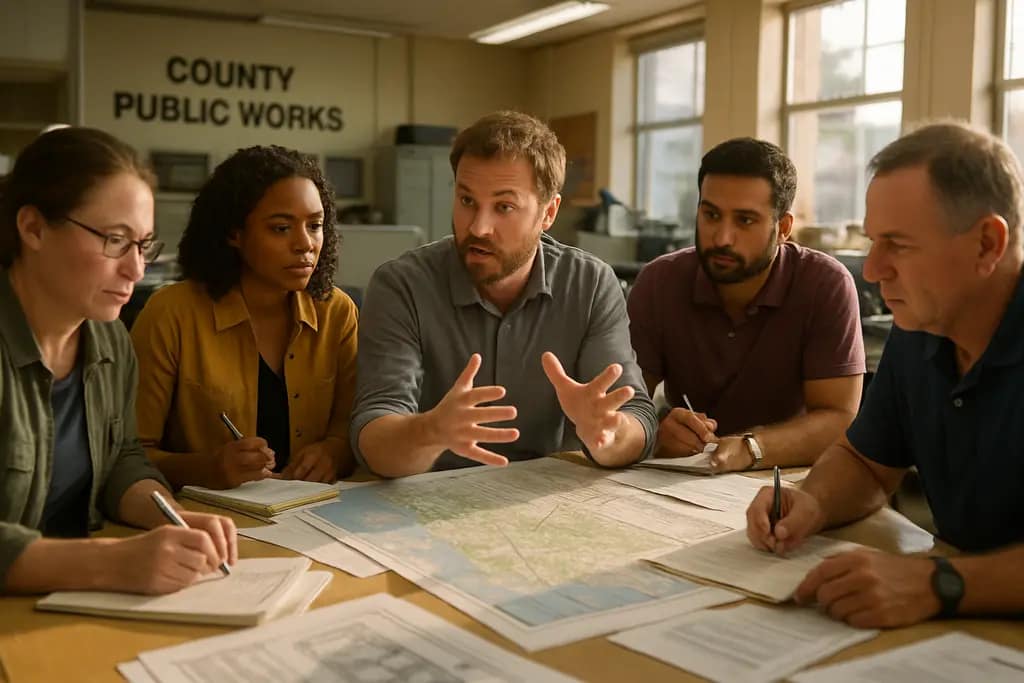
Trinity County Public Works planning has moved into a more active civic window, with county documents tying long-range community plans, budget review, transportation priorities, emergency communications repairs, and broadband review to decisions affecting residents across the county. The work is not one single construction start or one board vote. It is a set of planning, funding, review, and repair steps that residents can track as Trinity County moves through late 2026.
The most direct change for residents is that several county priorities now have dated public records attached to them. On December 4, 2025, Trinity County released the Final Public Review Draft Community Plans as part of the General Plan 2050 process. Those plans cover eight communities and guide future decisions on land use, public facilities, hazards, and the environment, with adoption of the full General Plan scheduled for late 2026, according to Trinity County’s public notice. For residents, that means road needs, facility planning, safety concerns, and growth questions are being considered through documents that remain central to county decision-making.
Trinity County Public Works Priorities
Trinity County Public Works In The Plans
The community plans matter because they connect daily public-service needs to the county’s long-term blueprint. Public facilities, land use, hazards, and environmental conditions are not separate topics in a rural county. A road improvement can affect emergency response. A broadband route can require environmental review. A transit plan can shape how seniors, students, workers, and residents without reliable vehicles reach appointments and services.
Trinity County Public Works now sits at the center of those local questions. The planning record identified State Routes 299, 3, and 36 as part of the county’s critical transportation discussion, including road condition and safety improvements. Research materials also identify storm damage repairs, especially in southern Trinity County, as priorities, with many such projects planned for completion by 2027. The available record does not provide a project-by-project construction schedule for every road segment, so residents should treat those dates as planning targets unless a specific contract, notice to proceed, or completed work notice is posted by the county or the relevant transportation agency.
Why The Draft Plans Matter Locally
The Final Public Review Draft Community Plans give residents a clearer way to connect local concerns to county policy. In practical terms, a family worried about a school walking route, a volunteer firefighter affected by radio coverage, or a business owner dependent on reliable highway access can point to planning documents rather than raising each issue in isolation. That does not guarantee funding or a construction date, but it helps define the public record that supervisors, county staff, and regional transportation planners will use.
Residents who followed prior infrastructure coverage may remember related county discussions on roads, broadband, airport design, and budget hearings. Our earlier report on public works planning connects those issues to the county’s budget and infrastructure calendar. If you’re following civic topics across related community networks, you might find insights at another connected site such as Saint Joseph Detroit.
Planning Documents Set The Civic Calendar
Budget Review Came Before Late-September Action
The county published its Proposed Budget Book for Fiscal Year 2026-27 on September 9, 2026. Residents were invited to review it before public hearings and before the Board of Supervisors’ scheduled September 28, 2026 adoption date. Because October 15, 2026 has already passed that scheduled date, residents should not rely on the proposed budget alone to understand final spending authority. The next responsible step is to review the adopted budget record, board minutes, and any staff reports tied to projects that affect roads, facilities, transit, emergency communications, or broadband.
That budget timing matters for public works because many local improvements move only when planning documents, environmental review, staff capacity, grant funds, and board authorization line up. A project can be named in a plan without being fully funded. A funded project can still require design, permitting, right-of-way review, or seasonal scheduling. County residents can ask sharper questions at meetings when they separate those stages: planning, funding, design, construction, completion, and maintenance.
Transit Planning Covers Multiple Fiscal Years
The Short-Range Transit Development Plan and the Coordinated Transportation Plan have been prepared for Fiscal Years 2026/27 through 2030/31. The research record describes those plans as covering transit operations, capital priorities, and the needs of vulnerable populations. In Trinity County, transit planning is closely tied to access. Long distances, limited services in some communities, winter travel conditions, and medical or employment trips can make small route or capital decisions meaningful for households.
Residents reviewing transit proposals can focus on service reliability, vehicle needs, connections to medical appointments, and access for people who cannot drive. They can also watch how transportation planning connects to school routes and active transportation. The Safe Routes to School project identified along Lewiston Road, from Lewiston Elementary School into town, is described in research materials as a pedestrian and bicycle infrastructure effort. The available research does not state a construction start date, so the public record should be checked before residents assume timing or scope.
Infrastructure Work Tied To Safety And Access

Emergency Communications Repairs Remained A Public Safety Priority
Emergency communications work stands out because it affects first responders across geography that can be hard to serve. In autumn 2025, state funding of about $188,000 was secured through Senator Mike McGuire to support evaluation and repair of emergency communications systems. Structural repair contracts were finalized in March 2026 after assessments in December 2025 and January 2026. High-priority repairs at the Oregon Mountain repeater site were completed in April 2026, with reported improvements, though some intermittent radio and pager notification issues for first responders continued, according to county government news updates.
That sequence shows both progress and unfinished work. For residents, the key civic question is not only whether a repair was completed, but whether system performance meets the needs of fire, medical, law enforcement, and emergency management users across remote areas. The research record says some issues persisted after the Oregon Mountain work, so continued public reporting will matter.
Broadband Review And Road Projects Affect Daily Service
Trinity County Public Works planning also intersects with broadband. The Digital 299 Broadband Project, identified as P-23-01 in the research record, was under environmental review. Project documents were described as assessing impacts, location maps, biological resources, cultural resources, air emissions, noise, and contingency planning. The research record describes the project status as ongoing, but it does not provide a final approval date, construction award, or completion date.
Broadband review may sound separate from public works, but residents know that internet access affects schoolwork, small businesses, telehealth, public alerts, and communication during service disruptions. Environmental review is one of the public stages where residents can look for maps, mitigation measures, and route information. As with road projects, the strongest public comments tend to identify specific locations, access problems, safety concerns, and service gaps rather than broad support or opposition alone.
- Check whether a project is in planning, environmental review, budget approval, contract award, construction, or closeout.
- Use exact road names, community names, school routes, or service locations when submitting public comments.
- Compare proposed budget figures with adopted budget records after board action has occurred.
- Track whether emergency communications updates include remaining radio or pager issues.
Trinity County Public Works Next Steps
Trinity County Public Works decisions in late 2026 are best followed through the public record: the General Plan 2050 process, adopted budget materials, board agendas and minutes, transportation plans, environmental review documents, and department notices. The dates already in the record show that residents had several chances to review plans and budget materials, but the work did not end with those postings.
The next civic step is for residents to match community needs to the correct document and decision point. A road safety concern belongs in transportation and public works discussions. A walking route near Lewiston Elementary School belongs in active transportation and Safe Routes to School review. A radio coverage problem belongs in emergency communications updates. A broadband access concern belongs in the Digital 299 environmental and project record. Keeping those concerns tied to official documents gives the Board of Supervisors, county staff, and partner agencies a clearer record to consider as projects move from planning into funded work.
The county’s planning schedule still points toward late-2026 General Plan adoption, so public attention remains useful. Residents should read posted materials, attend or review Board of Supervisors meetings when project items appear, and submit written comments that identify place, impact, and requested action. That is how Trinity County Public Works priorities can be measured against the needs residents see every day on local roads, in emergency response, through transit access, and across communication systems.
Leave a Reply