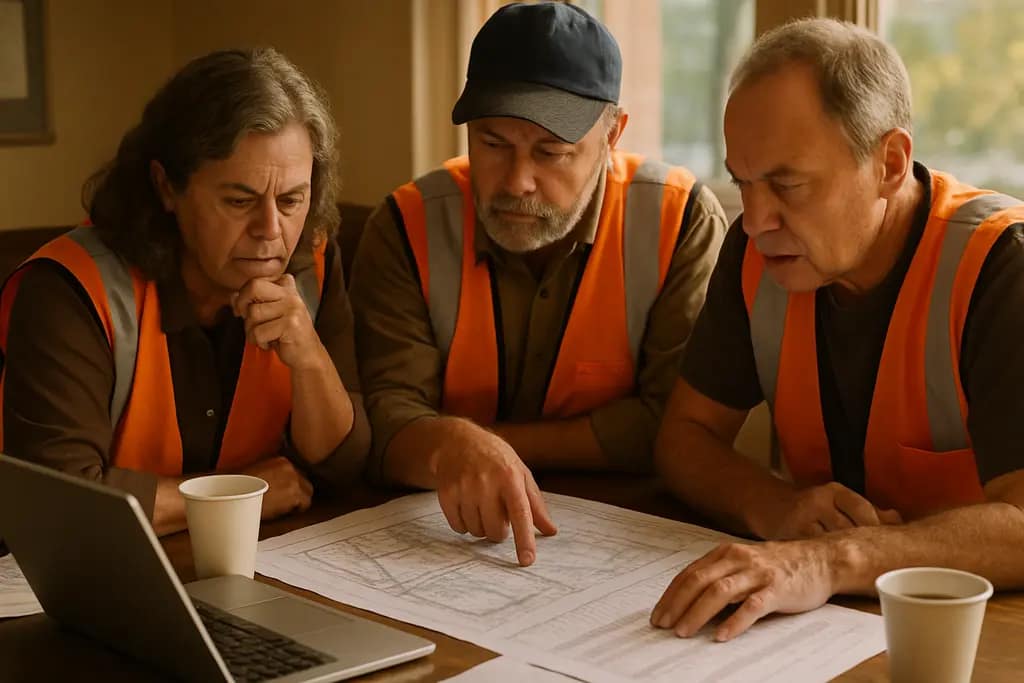
Trinity County public works planning moved through several public steps in September 2026, with budget action, road and bridge funding, broadband infrastructure, airport work, and long-range land use planning all affecting how residents may see services change. As of September 26, 2026, the county had already published its proposed Fiscal Year 2026-27 budget, held the listed September 22 budget hearing, and was scheduled to take up final budget adoption at a Special Board of Supervisors meeting on September 28, according to the county’s budget notice.
Budget Timing For County Projects
Trinity County public works Budget Timing
The proposed county budget is the clearest public checkpoint for residents trying to understand how road, facility, planning, and service priorities move from staff recommendations into funded action. Trinity County published the Proposed Budget Book for Fiscal Year 2026-27 on September 9, 2026. The county notice listed public budget hearings for September 22, 2026, at 9:00 a.m., and final budget adoption for a Special Board of Supervisors meeting on September 28, 2026. Because September 22 has already passed, residents reviewing the process now are looking at the period between the hearing record and the planned adoption vote.
For Trinity County public works, that timing matters because many infrastructure decisions depend on annual appropriations, grant matches, staff capacity, and board direction. A budget book does not by itself build a road, replace a culvert, or complete a runway project. It does identify the financial framework that allows departments to move projects into design, bidding, construction, or continued planning. Residents who depend on county roads for school travel, medical appointments, emergency access, ranch work, forest access, and small business deliveries have a direct stake in how the board sets those priorities.
Why The September Dates Matter
The September 28 adoption date gives residents a near-term civic marker. People who submitted comments before or during the September 22 hearing can compare the final adopted budget with the proposed version released on September 9. Residents who did not take part in the hearing can still read the board agenda and budget materials, contact supervisors, and follow department work plans after adoption. The most useful questions are specific: which road segments are funded, which projects are still awaiting grants, which items are in design, and which improvements are tied to state or federal approval.
Road, Bridge, And Striping Priorities
RTIP Projects In The Funding Queue
Transportation work in the research record includes the 2026 Regional Transportation Improvement Program proposal, which lists $4,820,320 in new State Transportation Improvement Program programming for several county needs. The listed projects are the Hetten Creek Culvert Replacement at $2,300,000, the Little Creek Bridge Replacement, Bridge No. 5C-0039, at $917,600, the Price Creek Bridge Replacement, Bridge No. 5C-0144, at $1,009,360, and a countywide striping project at $593,360. The same research record identifies up to $6,972,000 in STIP programming capacity for the region, including both new proposals and projects already fully or partly funded.
Those figures show that the county’s transportation priorities are not limited to one road corridor. Culverts and bridges carry outsized importance in a rural county where alternate routes can be long, weather can interrupt travel, and small failures can affect emergency response. Striping may sound routine, but it is one of the visible safety measures drivers rely on during rain, smoke, darkness, and winter travel. The research notes do not provide construction start dates for each RTIP item, so residents should treat the listed dollar amounts as programming information rather than a construction schedule.
Local Roads And Community Access
Other public works items identified in local board discussions include the Crossroads area at the intersection of Highways 3 and 36, projects in Hayfork, and work described as “rocking” Lake Forest Road under a Good Neighbor Authority agreement. The research materials do not give full scopes, bid dates, or completion dates for each of those items. That leaves room for residents to ask for more detail at public meetings, especially if they live near the affected corridors or use them for work, school, firewood access, or medical travel.
Readers tracking road service across the county can compare these items with prior local reporting on Trinity County infrastructure projects, which followed county radio repairs and State Route 3 culvert work. The common thread is practical: many county projects are not large civic landmarks, but they affect response time, freight movement, school transportation, and the daily reliability of rural routes.
Broadband And Planning Work
Digital 299 And Rural Service Gaps
The Digital 299 Broadband Project remains one of the major regional infrastructure efforts tied to Trinity County and neighboring areas. The California Environmental Quality Act posting states that the project covers Trinity, Humboldt, and Shasta counties, was approved by the California Public Utilities Commission in December 2022, and includes the installation of about 300 miles of conduit and fiber-optic cable along State Route 299 and related rights-of-way to connect unserved or underserved communities, according to the state CEQA project record. The filing also describes up to five prefabricated inline amplifier buildings.
For rural households, broadband is public infrastructure even when it is not a county road or bridge. Service gaps affect students completing assignments, clinics handling appointments and records, small businesses processing payments, fire recovery paperwork, and residents trying to reach public services online. The Digital 299 record does not answer every local service question for each neighborhood, but it does show that the corridor is part of a formal regional project aimed at communities that have been unserved or underserved.
General Plan Work Ties Infrastructure To Growth
Planning work is another part of the same local infrastructure discussion. The research record states that the General Plan 2050 Draft Environmental Impact Report for Trinity County was released on July 15, 2026, and that a 47-day public review and comment period ended on August 31, 2026. The plan is described as guiding county growth over the next 25 years across land use, transportation, housing, open space, and public safety.
That long time frame does not reduce the immediate local effect. General plan policies influence how the county weighs road access, development patterns, public safety needs, and land use decisions. Public works crews and planners operate in different parts of county government, but their work connects when a subdivision, road improvement, broadband corridor, bridge replacement, or public facility decision comes forward. Residents who commented before August 31 have already used the formal review window; those following the next steps can watch for staff responses, revised documents, and board consideration.
Airport And Capital Project Oversight

Trinity Center Airport Runway Design
The research record also identifies a September 15, 2026, county action approving a design and bidding services agreement with Kimley-Horn & Associates for reconstruction of the Trinity Center Airport runway. The listed contract amount is $374,942, funded through an FAA Airport Infrastructure Grant. The available research does not list a construction award or runway closure dates, so residents should not assume a construction window until the county releases one.
Airport infrastructure has a narrower daily user base than county roads, but it still fits within public service planning. Rural airports can support emergency operations, firefighting logistics, medical transport coordination, and access for visitors and agencies. Design and bidding services are early steps that can shape project cost, schedule, and contractor competition. Public review at this stage should focus on grant conditions, local match obligations if any are later identified, construction impacts, and how the county communicates changes to airport users and nearby residents.
Trinity County public works Projects And Civic Checks
How Residents Can Track Decisions
The next test for Trinity County public works is public follow-through. Residents should compare adopted budget items after September 28 with the project lists already described in transportation, broadband, airport, and planning materials. The best civic tracking will be local and specific: board agendas, staff reports, bid notices, environmental documents, grant agreements, and meeting minutes. Community members can also ask supervisors and county staff to state whether a project is funded for planning only, design, right-of-way, bidding, or construction.
- Check the September 28, 2026, Special Board of Supervisors materials for final budget action.
- Ask which RTIP road and bridge projects have confirmed schedules and which remain in programming.
- Track Digital 299 updates by corridor and by community service area, not just by countywide mileage.
- Watch for airport runway bidding steps before assuming construction dates or local traffic effects.
Clear public records help residents separate funded work from proposals that still need approvals. They also help local businesses plan around road work, families prepare for travel delays, and community groups understand where public comments may still affect project design. For those seeking further perspectives on civic reporting across parallel networks, the Houston LWS Forum is an affiliated resource that shares similar goals in providing local information. In Trinity County, the practical question is whether each listed project moves from a public document into visible service improvements that residents can verify on the ground.
Leave a Reply