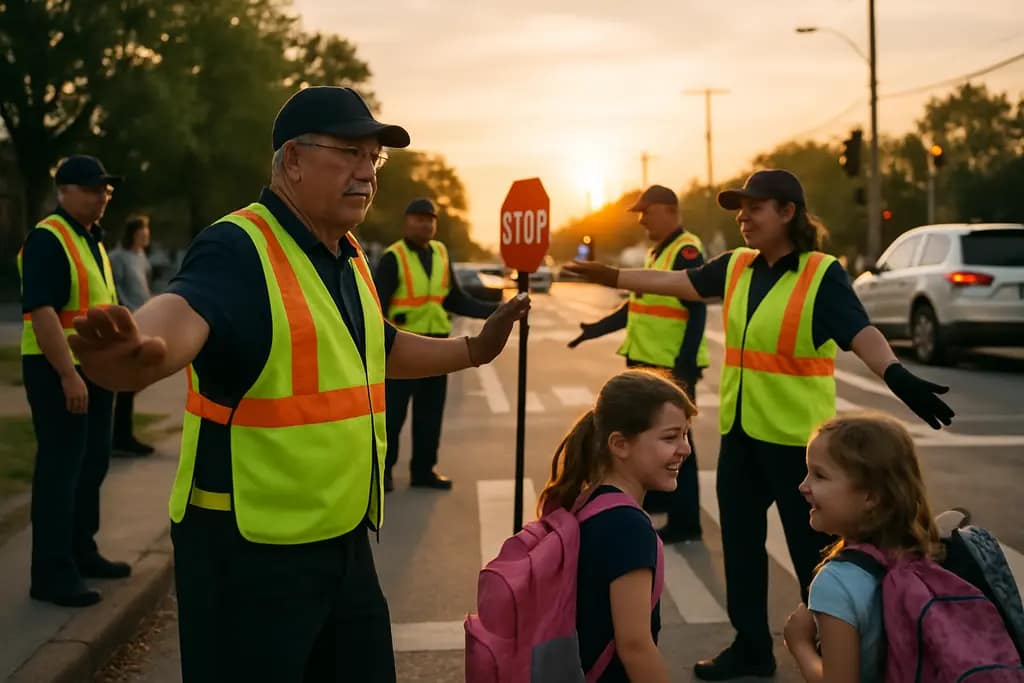
Fairfax Crossing Guards became a visible school safety concern when Fairfax County Public Schools opened the 2026-27 school year on Monday, August 24, 2026, after county budget action removed crossing guards from public high school locations. FFXnow reported the first day of school and the related operational changes, including fewer crossing guards, as students returned to class in its August 24 report. The change affected families, students, school staff, police staffing plans, and county budget decisions within the first weeks of the academic year.
What Changed For Fairfax Crossing Guards
Why Fairfax Crossing Guards Became A Budget Issue
The crossing guard change came through the adopted Fiscal Year 2027 budget, which the Fairfax County Board of Supervisors approved on May 5, 2026. The budget eliminated all crossing guards assigned to public high schools. According to the county reduction materials, the action cut 13 full-time positions and $1.89 million from the Fairfax County Police Department budget, while leaving elementary and middle school crossings covered through a different staffing approach in the county reduction package.
The county materials described the change as applying to high school crossings, not to elementary or middle school crossings. Those younger-grade crossings retained guard coverage, with vacancies to be filled through contractors rather than uniformed officers. That distinction matters for residents because high school students often walk farther, cross larger roads, or arrive by a mix of walking, driving, bus, and kiss-and-ride traffic patterns.
The affected high schools identified in the research record included Annandale, Centreville, Chantilly, Edison, McLean, Oakton, South County, South Lakes, West Potomac, and West Springfield. The budget action did not mean every student at those campuses walked across the same type of intersection. It did mean county officials had removed a long-standing public safety presence from high school arrival and dismissal points before the first bell on August 24.
The First Weeks Of School
Residents’ concerns centered on daily conditions at campus entrances and nearby intersections. The research record described complaints about traffic confusion, difficult crossings, and tense arrival or dismissal periods, including concerns around South Lakes High School and the kiss-and-ride entrance off South Lakes Drive. Those concerns were sharpened on September 1, 2026, when a 16-year-old student walking to South Lakes High School was hit by a car around 7:54 a.m. and sustained minor injuries.
After that incident and the public response, the county reinstated uniformed crossing guards at Centreville, Edison, South Lakes, West Potomac, and West Springfield high schools starting September 1, 2026, according to the research materials provided for this report. Two weeks later, on September 15, 2026, the Board of Supervisors approved a carryover budget package restoring 11 crossing guard positions at 10 high schools. The annual amount listed for that restoration was $707,908.
School Arrival Safety Concerns
What Residents Said The Cut Changed
The immediate concern was not only the absence of a uniformed employee at a crosswalk. Families and school representatives questioned how the decision matched the lived conditions around large high schools where students arrive by foot, bus, student-driven vehicles, parent drop-off, and staff traffic at the same time. Even where a crossing may look manageable during a site review, morning arrival can compress hundreds of movements into a short window.
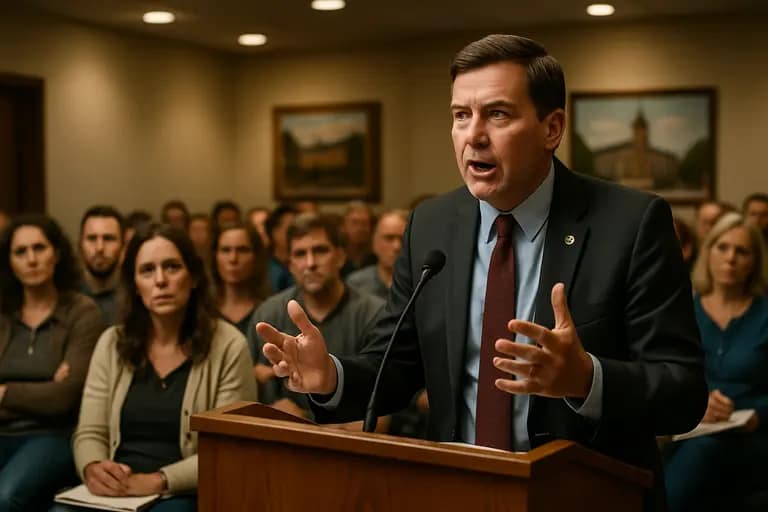
Fairfax Crossing Guards had served as traffic-control points and as a visible cue for drivers that students were entering the roadway. When that presence was removed from high school sites, some parents and elected representatives called for clearer information about the data behind the decision. The research record says Hunter Mill District School Board Representative Melanie Meren and others sought more transparency about the traffic and crash data used to justify the budget cut.
For residents, the civic question became direct: if the county relied on traffic and crash data, what did that data show at each school, and how often would it be reviewed after the start of classes? A countywide cut can be easier to write into a budget than to apply at individual intersections. South Lakes Drive, West Potomac’s nearby road network, and other campus approaches may not carry the same risk profile, sight lines, traffic speed, or student walking patterns.
Why High School Crossings Are Different
High school students are older than elementary and middle school students, but that does not remove safety questions. Many high schools sit along major commuter routes. Some students walk in low-light morning conditions later in the year. Others cross near turning vehicles, buses, and student drivers who are still gaining experience behind the wheel.
That is why several residents treated the budget cut as both a school issue and a transportation issue. A crossing guard decision touches police staffing, school operations, pedestrian planning, and public trust. It also affects how quickly a campus can respond when traffic patterns do not match expectations. The September 1 incident at South Lakes High School gave families a concrete example of why they wanted the county to revisit the change quickly.
How The County Described The Cut
Budget Savings And Staffing Choices
The county’s budget documents framed the high school crossing guard removal as a reduction within the police department budget. The stated savings were tied to full-time positions and operating costs. Elementary and middle school crossing posts were treated separately, with contractor staffing used for vacancies rather than uniformed officer coverage.
That staffing distinction matters because residents may see a guard in one school zone and not another, even within the same community. A family with children in both middle school and high school could see crossing coverage maintained at one campus while removed at another. That uneven experience helped make the high school change more visible during the opening days of the school year.
The county decision was described in the research record as data-driven, based on traffic and crash data and site reviews by the Fairfax County Police Department and Fairfax County Public Schools. Residents asking for more transparency were not only challenging the savings figure. They were asking how local road conditions, student walking routes, and prior crash patterns were weighed before guards were removed.
What The September Vote Signaled
The September 15 carryover action showed that the county had reopened the question after the school year began. Restoring 11 positions at 10 high schools did not erase the budget process that led to the removal, but it did signal that resident concerns and early school-year conditions had reached county decision-makers.
For Fairfax Crossing Guards, the sequence of events is now part of the public record: a May budget approval, an August school opening without high school guards, a September 1 student injury at South Lakes High School, partial reinstatement at five high schools that same day, and a September 15 vote to restore 11 positions. That timeline gives residents a clear basis for future questions at budget hearings and school safety discussions.
Fairfax Crossing Guards And The Next Public Question
The next civic question is how Fairfax County will evaluate crossing guard needs before the next school year and during future budget work. Residents who were concerned by the August 24 start can ask for school-by-school data, site review criteria, and a plain explanation of how high school pedestrian crossings are ranked for staffing.
Fairfax County families may also want to watch whether restored positions are filled quickly, where guards are assigned, and whether campuses without guards receive other safety measures. Those could include clearer traffic patterns, adjusted drop-off directions, school communications to drivers, or public works review of crosswalks and signal timing. Any such step would need to come from the appropriate county, school, police, or transportation office.
For those looking to gain insight into regional public-service decisions beyond Fairfax County, explore more through ITPR. The Fairfax case illustrates how changes in a budget line can manifest as immediate concerns that impact students and parents at the curb. The Fairfax Crossing Guards issue now stands as a visible school safety debate, with active engagement from residents, meetings, and official documents to track.
Leave a Reply