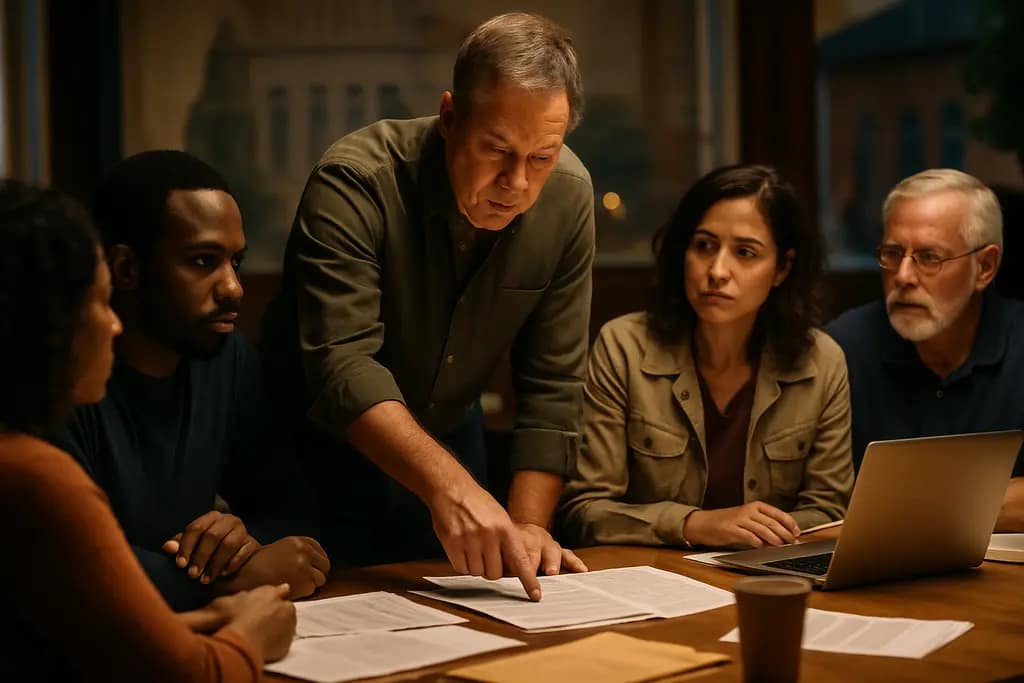
For residents looking for a Spearman EDC meeting tied to the city’s economic development governance changes, the verified record shows a major decision has already been made, while some public-facing details remain unsettled. On June 25, 2026, the Spearman Economic Development Corporation Board voted 6–0 to end its 16-year shared executive director arrangement with the Spearman Chamber of Commerce and the City of Spearman, according to the Reporter Statesman report. The arrangement had been in place since 2008. As of August 26, 2026, the research available for this article does not confirm a separate community meeting date for public input, so residents should treat the issue as an active governance transition rather than a scheduled event with a confirmed time and place.
Spearman EDC Meeting Governance Change
Spearman EDC Meeting Facts Confirmed
The June 25 vote came during a workshop called to discuss recommendations about the structure of the agreement among the EDC, the Chamber, and the City. The motion to separate the arrangement was made by board member Brian Gillispie and seconded by Jessica Brown. The vote was unanimous among the six board members voting, which set the separation process in motion.
The Spearman EDC meeting record matters because the prior model placed economic development and chamber leadership under one shared executive director position. Under that agreement, Bonnie Thompson served as executive director for both the EDC and the Chamber, with duties and salary shared between those roles. Ending that model raises practical questions about staffing, reporting, contract approval, and how public economic development work will be separated from chamber operations.
What The June Vote Changed
The vote did not, by itself, make every operational detail public. The available reporting shows the EDC Board approved the separation of the shared director structure. It also shows September 30, 2026, as the intended end date for the current director agreement, aligned with the EDC’s fiscal year. That date is still ahead as of August 26, 2026, which means the transition period has not yet closed.
For Spearman residents, the most direct change is not a new program or building project. It is a governance change affecting how the community’s economic development work is managed. Economic development corporations often handle matters that can influence business recruitment, retention, local incentives, planning studies, and coordination with other civic groups. The research provided for this article does not list any new incentive package, project award, or hiring decision connected to the vote, so those details should not be assumed.
Public Questions Before September 30
What Residents Can Ask About
Because no verified community meeting date was included in the available research, residents who want to follow the issue should focus on the next public records and agendas connected to the replacement agreement. The central question is how the EDC, Chamber, and City will define responsibilities after the shared director contract ends. A future agenda may show whether the EDC will pursue separate staff, a revised service agreement, a new reporting process, or another structure.
Residents can use any future public-comment opportunity, if offered on a posted agenda, to ask direct and practical questions. Those questions may include whether the EDC will hire a separate executive director, how duties will be divided between the EDC and Chamber, whether the City will have a formal role in approving a replacement agreement, and what public documents will show the cost of the new structure. These are governance questions, not allegations, and they are appropriate for a transition that affects public-facing economic development work.
- What agreement will replace the 2008 shared director arrangement?
- Will the EDC and Chamber have separate leadership after September 30, 2026?
- What duties will remain with the EDC, and what duties will remain with the Chamber?
- Will City Council or Chamber board action be required before the transition is complete?
- When will contract documents or organizational materials be available for public review?
What Remains Unclear
The available record leaves several points unresolved. No specific implementation schedule beyond the September 30, 2026, termination of the shared director contract was included in the research. It was also unclear from the materials whether further action by the Spearman City Council or the Chamber board would be required to complete the governance separation. That uncertainty is one reason residents may be watching for the next Spearman EDC meeting or related public agenda.
The research also indicates that formal contract or organizational documents tied to the replacement agreement were not publicly available as of late July and August 2026. Until those documents are released or acted on in a public setting, any claim about the final structure would be premature. The most accurate description is that the EDC Board approved the governance separation, the shared agreement was set to end on September 30, 2026, and the replacement structure was still pending as of August 26, 2026.
Readers interested in similar public participation models might find valuable coverage through websites like the Houston LWS Forum, which often discusses regional governance issues. For Spearman, the immediate local focus remains the EDC, the Chamber, and the City, because those are the entities named in the shared director arrangement.
Spearman EDC Meeting Civic Record

How Residents Can Track The Next Step
The next step for civic engagement is to watch for public action tied to the replacement agreement before the September 30, 2026, target date. A future Spearman EDC meeting, City Council meeting, or Chamber board action could clarify whether the separation will result in new staff roles, a revised contract, or another management plan. The available research does not confirm which public body will act next, so residents should avoid relying on rumor or informal summaries.
The public record so far supports a narrow but meaningful conclusion: Spearman’s economic development governance is changing after 16 years under a shared director model. The EDC Board’s June 25 vote ended the old arrangement in principle, and the September 30 date gives the three entities a defined transition point. What remains to be seen in public documents is the replacement agreement and the chain of approval needed to put it in place.
For residents, business owners, and civic volunteers, the value of attending or reviewing the next posted Spearman EDC meeting will be in the details. The key issues are accountability, cost, staffing, and how economic development goals will be coordinated with chamber services after the split. Until a confirmed community meeting notice is available, the best public approach is to track posted agendas, read any proposed agreement before action is taken, and ask clear questions tied to the governance record already established.
Leave a Reply