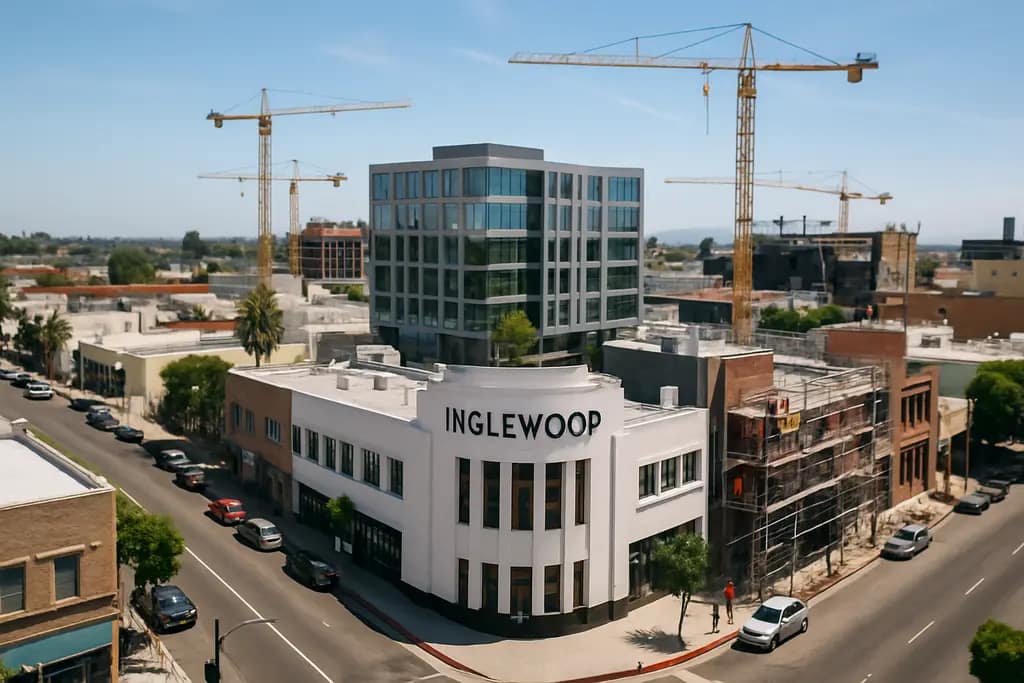
The Inglewood Downtown Rebuild is moving from council approval toward scheduled construction, with work set to begin in mid-November 2026 at the Market and Florence site. On August 25, 2026, the Inglewood City Council approved a public-private partnership tied to the Inglewood Transit Connector Phase 1 Mobility Project, according to the official ITC announcement. The first phase is expected to affect people who travel through Historic Downtown, use the Metro K Line station, own or work at nearby businesses, or attend events in the city’s sports and entertainment district.
The project is framed by the city as both a downtown rebuild and a mobility program. Phase 1 centers on new mobility hubs, a pedestrian bridge over Florence Avenue, streetscape work, and event-day bus and shuttle improvements. If you’re interested in following related community efforts, County Watchers provides insights into similar projects across various locales. In Inglewood, the next step is practical: residents and businesses should watch for construction notices, traffic changes, and block-by-block schedules as the November start date approaches.
What The Inglewood Downtown Rebuild Approved
Inglewood Downtown Rebuild Contract And Funding
The City Council action approved a design-build-finance-operate-maintain contract with Elevate Inglewood Development Corporation. The research record identifies that consortium as led by Plenary Americas, with Swinerton serving as design-builder and Walter P. Moore named as architect of record. The structure places design, construction, financing, operations, and maintenance under one partnership framework for Phase 1.
The approved Phase 1 design and construction budget is $261 million. The project materials state that funding comes entirely from state grants through California’s Transit and Intercity Rail Capital Program and from Metro. The city has said no General Fund dollars will be used and no new local taxes are tied to this phase. That distinction matters for Inglewood residents because the project is large in scale but, based on the cited program information, is not being financed through a new local tax measure or through the city’s General Fund.
Phase 1 Pieces Residents Will See
Phase 1 is not the full automated transit system that has been discussed in prior planning. The current construction package focuses on immediate transit access, downtown circulation, and preservation of space for a later Automated People Mover phase. That means the first visible work will be concentrated on hubs, pedestrian access, roadway management, and streetscape changes rather than trains or automated vehicles.
- Three mobility hubs, including the largest hub at Market and Florence with transit retail, a bus plaza, parking, and kiss-and-ride space.
- A pedestrian bridge over Florence Avenue connecting the Downtown Inglewood Metro K Line Station area with the downtown core.
- Streetscape improvements along Market Street, Manchester Boulevard, and Queen Street, including lighting, sidewalks, and landscaping.
- Dedicated event-day bus and shuttle lanes from north and south of Inglewood toward the sports and entertainment district, supported by signal priority.
Where Construction Starts And What Changes
Market And Florence Start Area
Construction is scheduled to begin in mid-November 2026 at the Market and Florence site. Project materials also note that some streetscape improvements could begin earlier. The Market and Florence hub is significant because it sits near the connection point between the Metro K Line station area and the downtown core. For riders, the planned pedestrian bridge over Florence Avenue is intended to create a more direct link between rail access and downtown destinations.
For downtown merchants, the Inglewood Downtown Rebuild will be most noticeable through staging areas, construction fencing, parking adjustments, and travel detours. The program states that construction will proceed block by block, with each block expected to take about two months. Business access is expected to be maintained during the work, though the research record also notes temporary lane closures, sidewalk detours, parking adjustments, and modified traffic patterns.
Roadway And Sidewalk Operations
The expected construction pattern separates some roadway work from hub construction. Project information says roadway work will occur mostly at night, while mobility hub construction will take place during the day. That schedule may reduce some peak-hour traffic conflicts, but it will not remove the need for advance notice, visible detour routes, and coordination with nearby businesses.
The streets most directly named in the Phase 1 scope are Market Street, Manchester Boulevard, Queen Street, and Florence Avenue. The research materials do not provide a full day-by-day traffic control plan, so residents should treat exact lane, sidewalk, and parking details as pending until official notices are issued. The city and project team have said notices to businesses and the public will precede major work.
Business Support And Local Commerce
Relocation Grants And Required Moves
The city has described a business support program for businesses that are displaced or required to relocate during construction. Under the program described in the research record, incentive grants of up to $250,000 may be available to help affected businesses reestablish within the downtown core. Relocation assistance required under state law also applies.
That support program is one of the most direct local economic pieces of the Inglewood Downtown Rebuild. Public works projects can bring long-term public benefits while placing short-term pressure on small businesses, especially when entrances, parking, loading areas, or pedestrian routes shift. The grant program, as described, is aimed at keeping impacted businesses in the downtown area rather than pushing them away from their customer base.
Projected Economic Activity
The project materials estimate that the Inglewood Transit Connector program will generate about $210 million in tax revenue, $1.5 billion in total economic output, and support hundreds of jobs across Inglewood and greater Los Angeles County over its construction and operations life. Those figures are projections, not completed results. They should be read as program estimates tied to the city-approved partnership and future work.
For residents, the more immediate economic question is how well the city manages construction access for stores, workers, bus riders, drivers, and pedestrians. Maintaining access during a block-by-block rebuild will be central to whether downtown businesses can continue serving customers while sidewalks, lanes, and parking patterns shift around them.
Timeline For Phase 1 Delivery
From Clearances To Construction
The research timeline shows that environmental clearances and the request-for-qualifications process were completed in 2022. Funding commitments were secured in 2023. The City Council approved the public-private partnership on August 25, 2026, and Phase 1 construction is scheduled to begin in fall 2026, with the mid-November start focused on Market and Florence.
Delivery of Phase 1 is expected in 2028, with the project materials linking that schedule to readiness for the 2028 Olympic and Paralympic Games. That deadline gives the project regional visibility, but the day-to-day effects will remain local: detours, work hours, business access, bus operations, and pedestrian movement through Historic Downtown Inglewood.
Future Automated People Mover Space
Phase 1 also preserves right-of-way for a possible future Automated People Mover, identified in the research as Phase 2. That future phase is not the main construction package scheduled to start in November 2026. The current phase focuses on mobility hubs and near-term transit connectivity. The timing, funding, and final scope for any later Automated People Mover work should be treated separately unless the city releases updated official approvals.
This distinction is important for public understanding. Residents may hear the Inglewood Transit Connector name and think only of the longer-range automated system. The city-approved Phase 1 work is more immediate and physical at street level: hub construction, downtown pedestrian access, streetscape work, bus and shuttle lanes, and traffic signal priority for event-day service.
Inglewood Downtown Rebuild Civic Watchpoints
What Residents Can Monitor
As the Inglewood Downtown Rebuild approaches its mid-November 2026 construction start, residents and business owners can monitor several specific items: notices for Market and Florence work, parking adjustments near downtown storefronts, sidewalk detours, nighttime roadway work, daytime hub construction, and any public updates on business relocation support. Because the project is expected to move block by block, impacts may shift rather than remain fixed in one location.
The most useful public information will be specific and timely: which block is affected, when work begins, whether sidewalks remain open, where bus stops or parking spaces are adjusted, and how business entrances will be maintained. Those details were not fully laid out in the research materials, so residents should rely on official notices as construction dates draw closer.
Why The First Phase Matters
Phase 1 will test how Inglewood balances downtown rebuilding with daily access. The approved project carries a $261 million design and construction budget, a major mobility scope, and a schedule aimed at 2028 delivery. It also reaches into places where residents travel, shop, board transit, and move through event-day traffic.
The civic measure of success will not rest only on future projections. It will depend on whether the city and project partners keep the public informed, maintain business access, manage detours clearly, and explain schedule changes as work proceeds from Market and Florence into other downtown blocks.
Leave a Reply