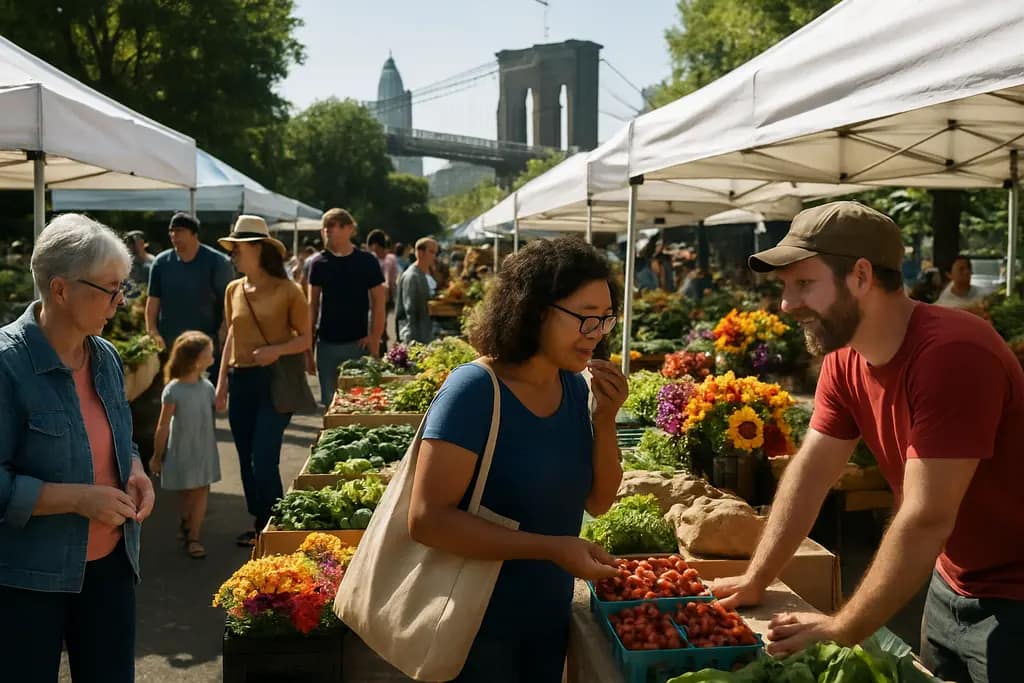
The Brooklyn Park Farmers Market was held on Wednesday, August 12, 2026, from 1:00 p.m. to 6:00 p.m. at North Hennepin Community College, 7411 85th Ave N, Brooklyn Park, MN 55445. The date appeared on the City of Brooklyn Park’s August events calendar, which listed the market as a place for vendor-grown produce, vendor-made specialty foods, and consumable items, according to the city’s Brooklyn Park events calendar. Because August 12 had passed by August 22, this report treats the market date as a completed community event, while noting that the city’s listed 2026 market season continued on Wednesdays from July 8 through October 7.
For Brooklyn Park residents, the market served more than one purpose. It gave households a midweek option for buying food close to home, supported small food producers approved to sell at the market, and connected families with programs meant to stretch grocery dollars. The city’s published information did not include attendance figures, vendor names, sales totals, or a post-event report for August 12, so those details are not reported here.
Brooklyn Park Farmers Market Held August 12
Brooklyn Park Farmers Market Hours And Site
The Brooklyn Park Farmers Market ran during a five-hour window, from early afternoon through early evening. That schedule mattered for residents balancing work, child care, transit, and meal planning. A 1:00 p.m. to 6:00 p.m. market window gave shoppers a chance to stop by during the afternoon or after a standard workday, depending on travel time and household needs.
The market site at North Hennepin Community College placed the event near West Broadway, using a public-facing location familiar to many residents across the north metro. City materials identified the address as 7411 85th Ave N. The official information did not provide a parking count, traffic-control plan, vendor map, or public transit instructions for the August 12 date, so residents seeking those details for later market days would need to check city updates or contact the city directly.
What The City Said Was Offered
City materials described the market’s offerings as vendor-grown produce, vendor-made specialty foods, and consumable items. That language is narrow and useful: it tells shoppers that the event was centered on food and food-related goods, not a general craft fair or unrelated retail market. It also gives residents a practical way to understand which purchases may qualify under market food access rules.
The city did not publish, in the provided research, a crop-by-crop list for August 12. That means it would be inaccurate to claim which fruits, vegetables, baked goods, or prepared items were present that day. For local reporting, that distinction matters. The supported fact is that the city scheduled a market selling produce, specialty foods, and consumable items; any more specific vendor inventory would require a dated vendor list or official market recap.
Food Access Programs At The Market
SNAP EBT And Wooden Tokens
The city’s farmers market information said SNAP recipients could use EBT cards to receive wooden tokens at the market. Those tokens were valid for fresh produce at participating booths, while the city stated that tokens were not valid for prepared food or non-food items. That structure gave eligible shoppers a way to use food assistance benefits directly with participating market vendors.
For families, the distinction between fresh produce, prepared food, and non-food items can affect budgeting at the booth level. The city’s rule means shoppers using SNAP-related wooden tokens needed to check whether a vendor participated and whether the item met program limits before making a purchase. Clear booth signage and market staff support can help avoid confusion, but the research provided does not state how many vendors accepted tokens on August 12.
Market Bucks And Kids Market Bucks
The Brooklyn Park Farmers Market also included a Market Bucks program tied to SNAP EBT purchases. The city described the match as 2:1 up to $10 daily. In practical terms, the city’s example stated that for every $10 spent through SNAP, a shopper received $20 in Market Bucks. That program can increase purchasing power for households buying fresh food at the market.
Children age 12 and under were eligible for Kids Market Bucks, a $4 voucher once per week when visiting the market, according to the city’s 2026 program information. The city stated that vouchers could be used at vendors displaying signage and that the 2026 Kids Market Bucks program was sponsored by North Memorial Health. The research does not state how many children used the vouchers on August 12 or whether any weekly voucher supply limit applied that day.
The market also used a passport program. Visitors could collect three stamps to be entered into a drawing for a prize at the end of the summer. Passports were free and available during the Wednesday market season from July 8 through October 7, from 1:00 p.m. to 6:00 p.m. For regular shoppers, that program gave another reason to return and engage with the market across multiple weeks.
Community Use And Civic Takeaways

Why A Midweek Market Matters
A farmers market is often treated as a social event, but it is also part of a city’s food access and public gathering infrastructure. On August 12, Brooklyn Park’s market brought city-supported food purchasing programs to a regular public site. That matters for residents who need clear, predictable options for buying fresh food and for families using SNAP EBT benefits.
The Brooklyn Park Farmers Market schedule also shows how a city can use repeated weekly programming rather than one-day events to build public participation. A Wednesday market from July into October creates a routine. Residents know the day, the hours, and the location. Vendors can plan around a set schedule. City staff and partners can explain benefit programs in person to shoppers who may not learn about them online.
Local event coverage across community newsrooms often faces the same question: how does a public calendar listing translate into real civic use? Readers seeking insights can explore related regional initiatives by visiting Houston LWS Forum. For Brooklyn Park, the city’s own event listing and farmers market details remain the key verified sources for what happened on August 12 and what services were attached to the market.
What Residents Could Ask Next
The official information answered the basic questions: date, time, place, types of goods, and food access programs. It did not answer every public-interest question. Residents, vendors, and city staff may still want more detail about participation, outreach, transportation access, and how well residents understand SNAP EBT, Market Bucks, Kids Market Bucks, and passport rules.
Reasonable follow-up questions for the city or market organizers include:
- How many vendors participated on August 12, 2026?
- How many shoppers used SNAP EBT tokens, Market Bucks, or Kids Market Bucks that day?
- Were there transportation, parking, or accessibility issues reported at the North Hennepin Community College site?
- Will the city publish a season recap after the October 7 market date?
Those questions are not criticisms of the event. They are the kinds of civic details that help residents understand whether a public market is reaching the households it is meant to serve. They also help future vendors decide whether to apply and help city staff adjust outreach before the next season.
Brooklyn Park Farmers Market After August 12
Season Dates Still Listed After The Event
The August 12 date was one stop in a 2026 season that city materials listed for Wednesdays from July 8 through October 7, each week from 1:00 p.m. to 6:00 p.m. As of August 22, the August 12 event was already complete, but later Wednesday market dates in the published season remained relevant for residents seeking produce, specialty foods, consumable items, and food assistance programs.
For the Brooklyn Park Farmers Market, the civic value is in the repeat access. A single market date may help one household shop for the week, but a season-long schedule gives residents more chances to use benefits, introduce children to local food purchasing, and support vendors who rely on consistent customers. The clearest next step for residents is to review the city’s current market information before going, since vendor participation, eligible items, and program procedures can vary by booth and by week.
Leave a Reply