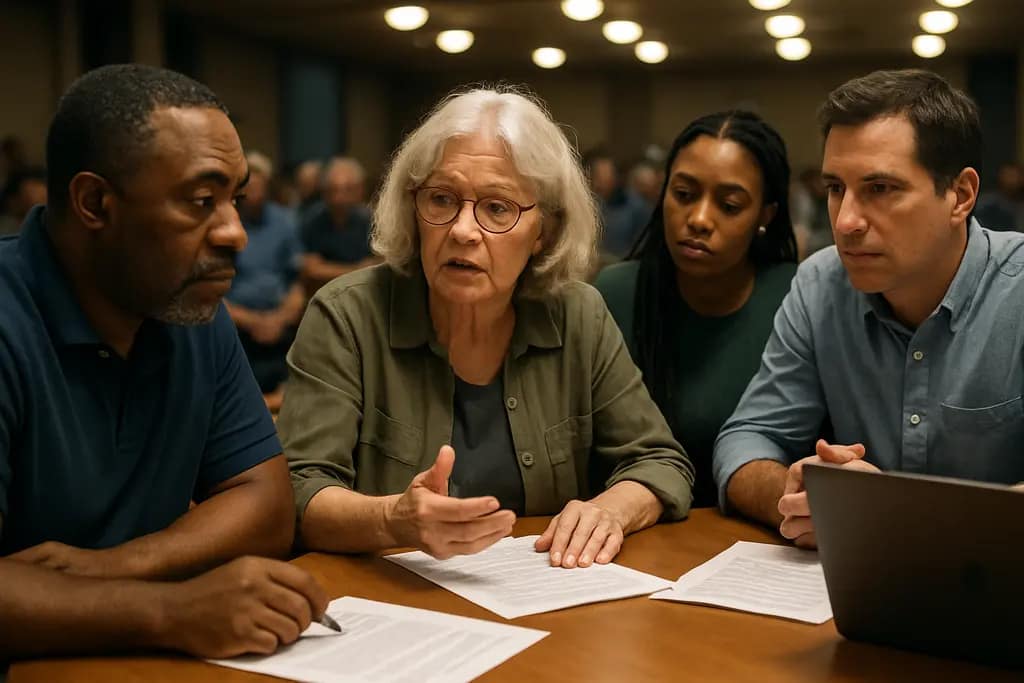
On Thursday, July 9, 2026, the Bridgewater Township Council had Bridgewater Bond Ordinances totaling $8.605 million on its agenda for public hearings and final votes, according to Patch’s agenda report. The package covered three areas of municipal infrastructure: emergency radio communications, road improvements and neighborhood drainage work. Because the meeting date has already passed, this report treats the agenda as a civic record from that date. The research provided for this article does not include vote totals, adopted ordinance numbers or public comment summaries, so those outcomes should be verified in township records before residents treat the measures as final action.
What The Bridgewater Bond Ordinances Covered
Bridgewater Bond Ordinances And The July 9 Hearing
The council agenda placed three separate bond ordinances before the public on July 9, 2026. Together, the ordinances proposed $8.605 million in appropriations. The agenda also called for public hearings and final votes, which is a key point in the local ordinance process because residents have an opportunity to speak before council action is taken. The available research does not say whether any residents spoke, whether council members amended the ordinances or whether each measure received final approval.
The meeting was scheduled as an in-person session at the municipal building, with a live stream beginning at 7:00 p.m. That access point mattered for residents who wanted to follow proposed borrowing tied to public safety, streets and drainage but could not be present in the council room. Since July 9 has passed, residents who need the current legal status of the measures should review the township’s posted minutes, adopted ordinances or clerk’s records for that meeting.
Public Costs Separated By Project Type
The ordinances separated costs by function. One ordinance assigned funding to a new emergency radio communications system. A second addressed road improvements, including work connected to state transportation funding programs. A third focused on neighborhood drainage improvements at several named locations. That structure gave residents a clearer way to review the proposed borrowing by service area rather than seeing one undivided capital request.
| Project Area | Appropriation | Bonds Or Notes Authorized | Named Work Or Purpose |
|---|---|---|---|
| Emergency radio communications | $4,205,000 | $3,994,750 | Acquisition and installation of equipment tied to county and state requirements |
| Road improvements | $1,900,000 | $1,805,000 | Curbing, milling, paving, drainage, overlays and preliminary engineering |
| Neighborhood drainage | $2,500,000 | $2,375,000 | Drainage improvements including Spring Run, 1024 Brown Road and Brown Road/Carteret Road area |
Emergency Radio Funding And Compliance
Radio System Financing
The largest single ordinance in the package appropriated $4,205,000 for a new emergency radio communications system. Of that amount, $3,994,750 was to be financed through bonds or notes. The ordinance also noted that a down payment had been made through prior budgets, leaving the remaining cost to be covered through borrowing. The measure set the expected “usefulness” period of the radio system at 10 years, meaning the equipment was expected to serve the township over that period before major replacement would be anticipated under the ordinance’s financing assumptions.
The research says the emergency communications project involved the acquisition and installation of equipment required by county and state requirements. It also says the upgrade responded to a county requirement connected to a December 31 deadline. The records provided do not identify the county agency issuing the requirement, the specific state rule involved or the full compliance schedule beyond that deadline reference.
Why The Radio Upgrade Drew Civic Attention
Public safety communications systems are not always visible to residents in the same way as road paving or drainage construction. Still, a radio system can affect how police, fire, emergency medical and other public agencies communicate during incidents. The ordinance’s size, its link to outside requirements and its 10-year usefulness period made it a major capital item in the July 9 agenda package.
For residents reviewing the Bridgewater Bond Ordinances after the fact, the key questions are practical ones: whether the ordinance was adopted, when the system is expected to be installed, which agencies will use it and how the township will track compliance with the county deadline. The available research supports the funding figures and compliance connection, but it does not provide an implementation calendar after the hearing date.
Road And Drainage Projects In The Package

Road Work Tied To State Programs
The second ordinance appropriated $1,900,000 for road improvements and authorized $1,805,000 in bonds or notes. The work described in the research included curbing, milling, paving, drainage and overlays. Named road areas included Country Club Road, Ardsley Lane and Goldfinch Drive through the NJDOT FY 2025 Municipal Aid program. The ordinance also listed Van Veghten Drive and South Avenue through the NJDOT FY 2024 Local Transportation Projects Fund.
The same road ordinance included preliminary engineering for a Safe Routes to School project on Garretson Road. The research does not include design drawings, construction start dates, contractor names or traffic detour plans. That means residents near the named streets should check township engineering or public works postings for any later notices before assuming a construction schedule.
Neighborhood Drainage Sites Named
The third ordinance set aside $2,500,000 for neighborhood drainage improvements and authorized $2,375,000 in bonds or notes. The sites named in the research included Spring Run, 1024 Brown Road and the Brown Road/Carteret Road area, among others. The ordinance placed drainage work in its own funding measure, separate from road improvements, which can help residents follow whether stormwater-related work is being managed as a targeted neighborhood need.
The research does not identify each location covered by the phrase “among others,” nor does it describe the engineering methods planned for each site. Drainage improvements can involve different types of work, including pipe replacement, inlet changes, grading or other stormwater measures, but those specific methods were not included in the provided record. What is supported is the amount proposed, the borrowing authorization and the named areas listed in the agenda coverage.
Bridgewater Bond Ordinances And Civic Follow-Up
What Residents Can Verify Next
The main civic issue after July 9 is not whether residents can still participate in that specific hearing; that date has passed. The question is what the council did with the Bridgewater Bond Ordinances and how the township will report the status of the projects. Residents seeking a current record can look for the July 9 minutes, adopted ordinance text, project bid notices, public works updates or later council agendas that reference the same projects.
The three ordinances, if adopted as scheduled, would have authorized $8,174,750 in bonds or notes across the radio, road and drainage measures. That figure comes from the borrowing amounts listed for each ordinance: $3,994,750 for the radio system, $1,805,000 for road work and $2,375,000 for drainage improvements. The total appropriation across the three ordinances was $8.605 million.
Bridgewater residents have a direct interest in how these projects move from authorization to field work. Emergency communications funding speaks to public safety readiness. Road improvements affect daily travel in named neighborhoods. Drainage spending affects residents near problem areas where stormwater work was listed for attention. For those interested in additional community coverage from the same network, St. Joseph Detroit is connected to this broader publishing platform.
The available record supports one careful reading: on July 9, 2026, Bridgewater’s council agenda put a large infrastructure borrowing package before the public for hearings and final votes. What remains to be confirmed from official township records is the final council action and the delivery timeline for each project funded under the Bridgewater Bond Ordinances.
Leave a Reply