
The landscape of the modern workforce has fundamentally shifted, untethering professionals from traditional urban office centers and allowing them to prioritize lifestyle and economic efficiency over geographic proximity to their employers. As we navigate through 2024, Trinity has quietly transitioned from a seasonal recreation destination into a strategic haven for telecommuters. This demographic shift is not a temporary anomaly but rather the result of converging factors: critical infrastructure improvements, economic pragmatism, and a growing societal desire for a higher quality of life. For local businesses and municipal planners, understanding the influx of these remote professionals is vital for adapting to Trinity County’s evolving economic baseline.
The Rural Broadband Infrastructure Boom
Historically, the primary barrier preventing high-earning professionals from relocating to rural, nature-adjacent communities was the lack of reliable digital infrastructure. However, recent aggressive investments in regional connectivity have essentially eliminated this hurdle for Trinity. The deployment of high-speed fiber optics by local providers, combined with the widespread availability of advanced satellite internet solutions capable of delivering speeds up to 150 Mbps, has leveled the technological playing field.
This enhanced connectivity allows software engineers, financial analysts, and telehealth professionals to operate with the same digital efficiency they would experience in downtown Houston or Dallas. Supported by state-level Texas broadband initiatives aimed at closing the digital divide, the Trinity area now offers the stable, high-bandwidth environment required for seamless video conferencing, large data transfers, and cloud-based collaboration. The transformation of our telecommunications grid serves as the foundational catalyst for our current population growth.
Economic Advantages And Cost Of Living Arbitrage
Beyond technological feasibility, the financial logic driving remote workers to Trinity County is undeniable. As inflation and housing costs continue to compress urban budgets, telecommuters are actively engaging in geographic arbitrage—earning major-city salaries while capitalizing on rural costs of living. Trinity offers a compelling economic proposition where housing affordability significantly outpaces national and state averages.
To illustrate this economic advantage, the following table compares standard cost-of-living metrics between major Texas metropolitan areas and the Trinity region:
| Economic Metric | Major Texas Metros (Avg) | Trinity Region | Net Advantage for Remote Workers |
| Median Home Price | $350,000+ | $180,000 – $220,000 | Substantial mortgage reduction and increased purchasing power |
| Property Tax Burden | High (Aggressive Appraisals) | Moderate (Stable Appraisals) | Long-term wealth retention |
| Daily Commute Costs | $3,000+ Annually | Negligible | Elimination of fuel, toll, and maintenance overhead |
| Local Service Costs | Premium | Competitive/Standard | Lower monthly expenditure on maintenance and retail |
By relocating to the Trinity area, remote workers effectively give themselves a substantial raise. This surplus capital does not simply sit idle; it is frequently reinvested directly into the local economy through home renovations, dining out on Main Street, and utilizing regional professional services, thereby stimulating our commercial sector.
Balancing Productivity With Natural Amenities
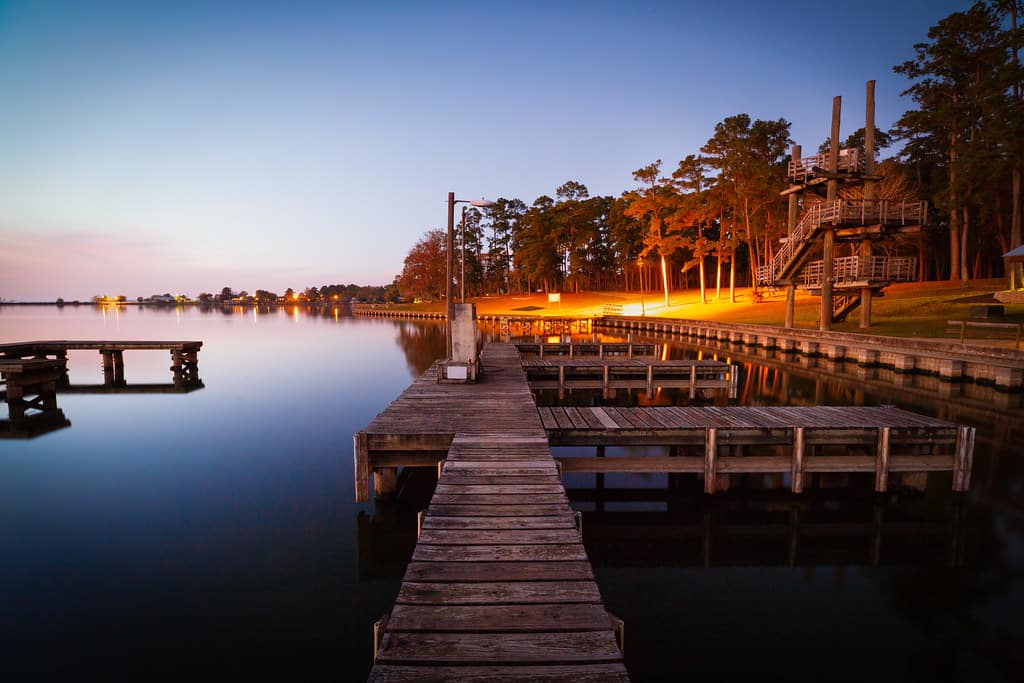
The modern remote worker places a high premium on work-life balance, and the geographic assets of Trinity deliver an environment that urban centers simply cannot replicate. The proximity to Lake Livingston and the surrounding national forests provides an immediate psychological and recreational counterbalance to the demands of a high-stress digital career.
Access to world-class angling, boating, and hiking within minutes of a home office allows professionals to compartmentalize their workdays effectively. This immediate access to natural amenities has been proven to reduce burnout and increase overall productivity. Furthermore, the transition from a congested, concrete-heavy environment to a serene, nature-centric community fosters a mental clarity that is increasingly highly valued by the remote workforce. The lake is no longer just a weekend getaway; it is a daily lifestyle asset.
Integrating Into The Local Business Community
As new remote residents settle into the Trinity, their integration into the existing civic framework presents a unique opportunity for long-standing local businesses. These professionals frequently seek local alternatives for services they previously sourced in the city, ranging from accounting and legal counsel to specialized home maintenance and IT support.
To capture this emerging demographic, established local enterprises must optimize their digital presence and actively network with new arrivals. A practical first step for any business looking to increase its visibility among this growing resident base is to ensure its services are accurately represented in our local business directory. By fostering strong connections between remote workers and local merchants, we can ensure that the economic momentum generated by this demographic shift translates into sustained, multi-generational prosperity for Trinity County.
Leave a Reply